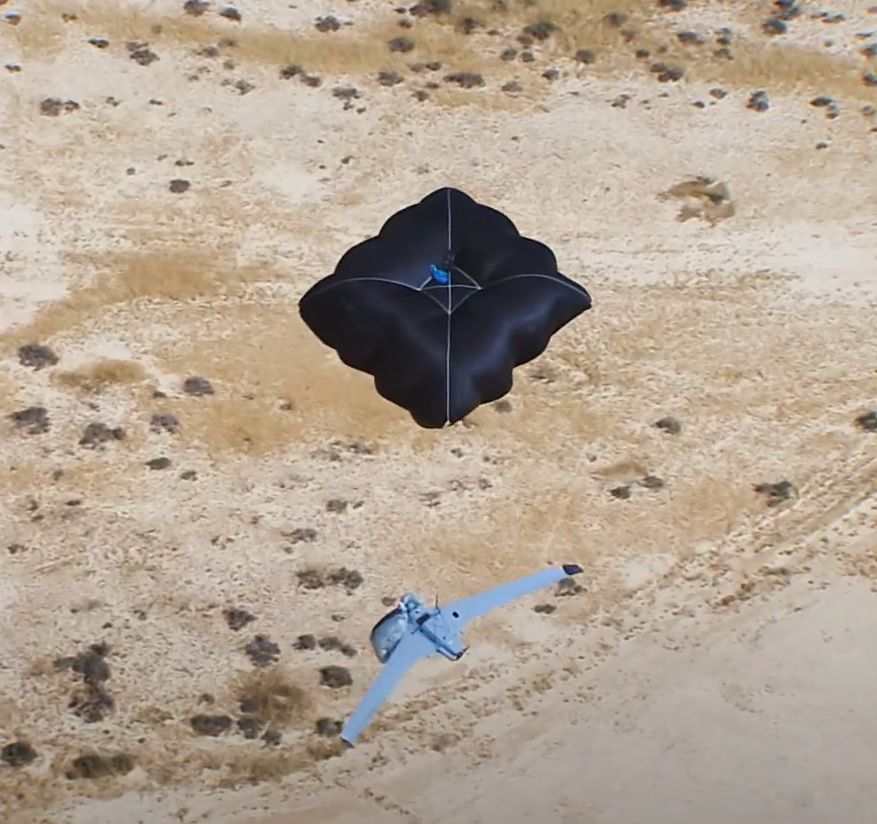
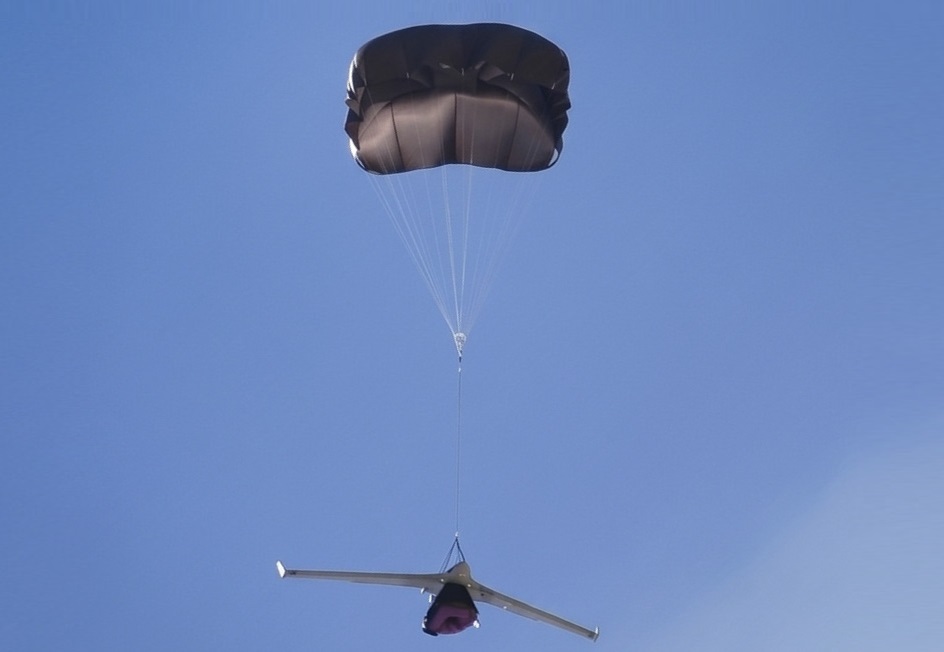
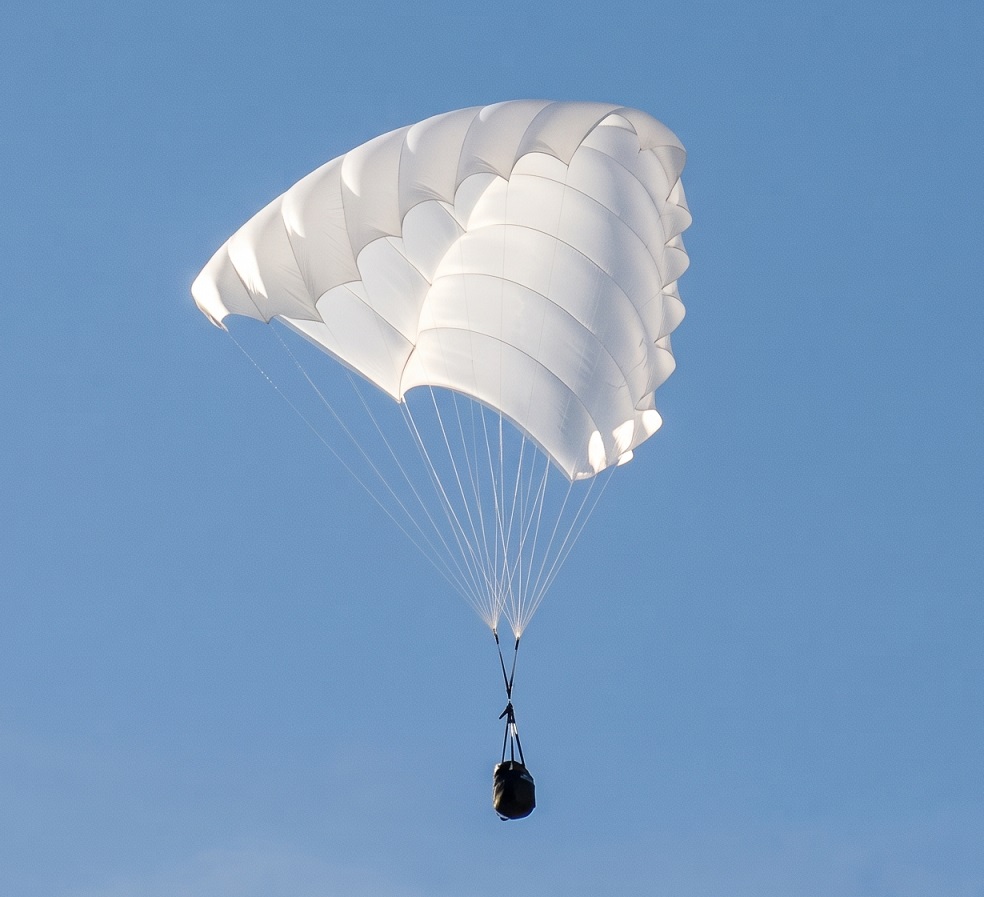
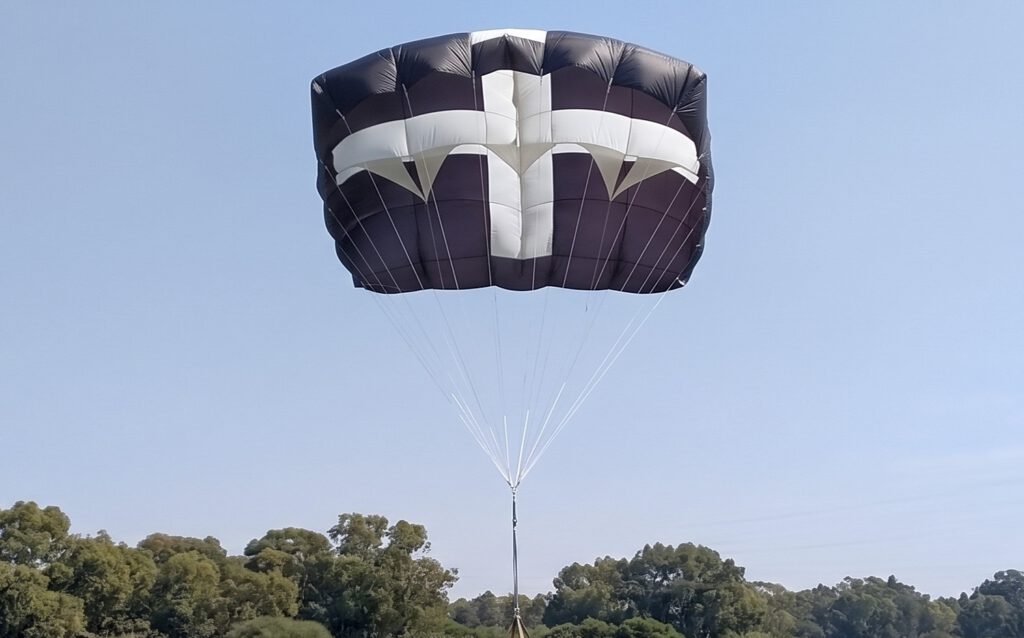
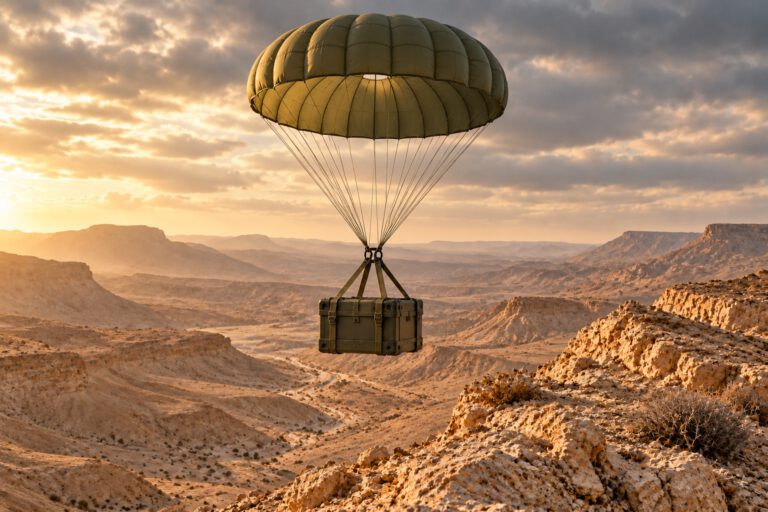
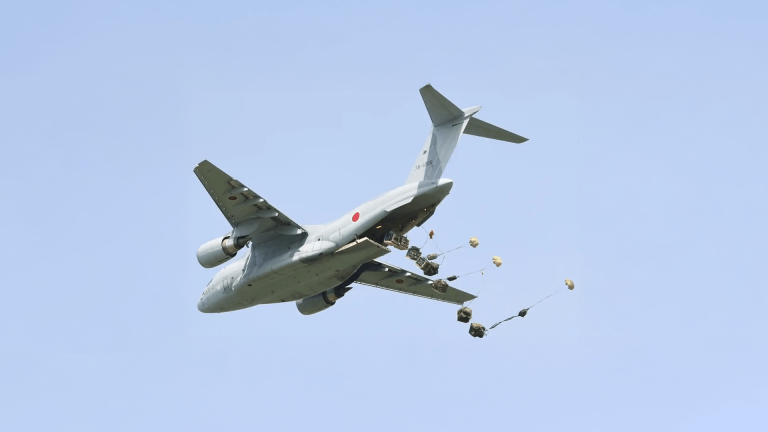
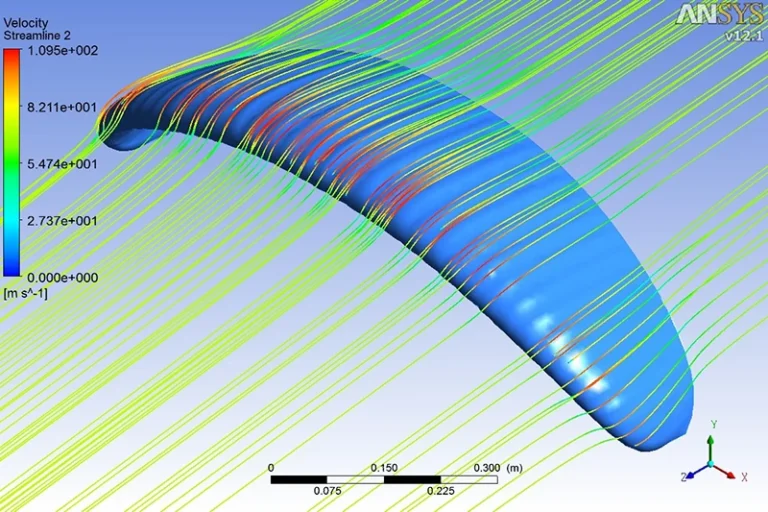
Parachute recovery gives fixed-wing UAVs a controlled way to return the platform when conventional landing is not available or when flight can no longer continue safely.
APCO Aviation Defense develops lightweight, low-bulk recovery textile solutions around the aircraft, payload, flight envelope and required return condition.
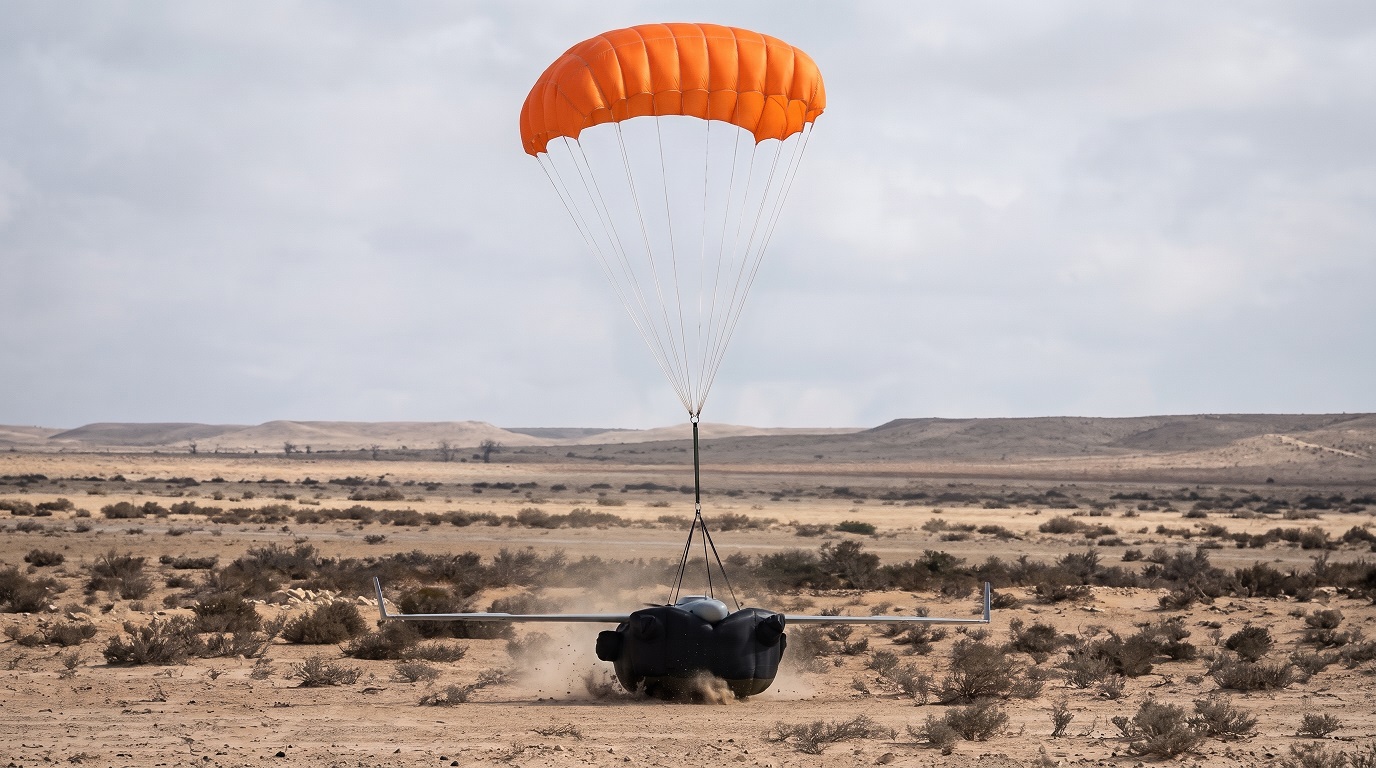
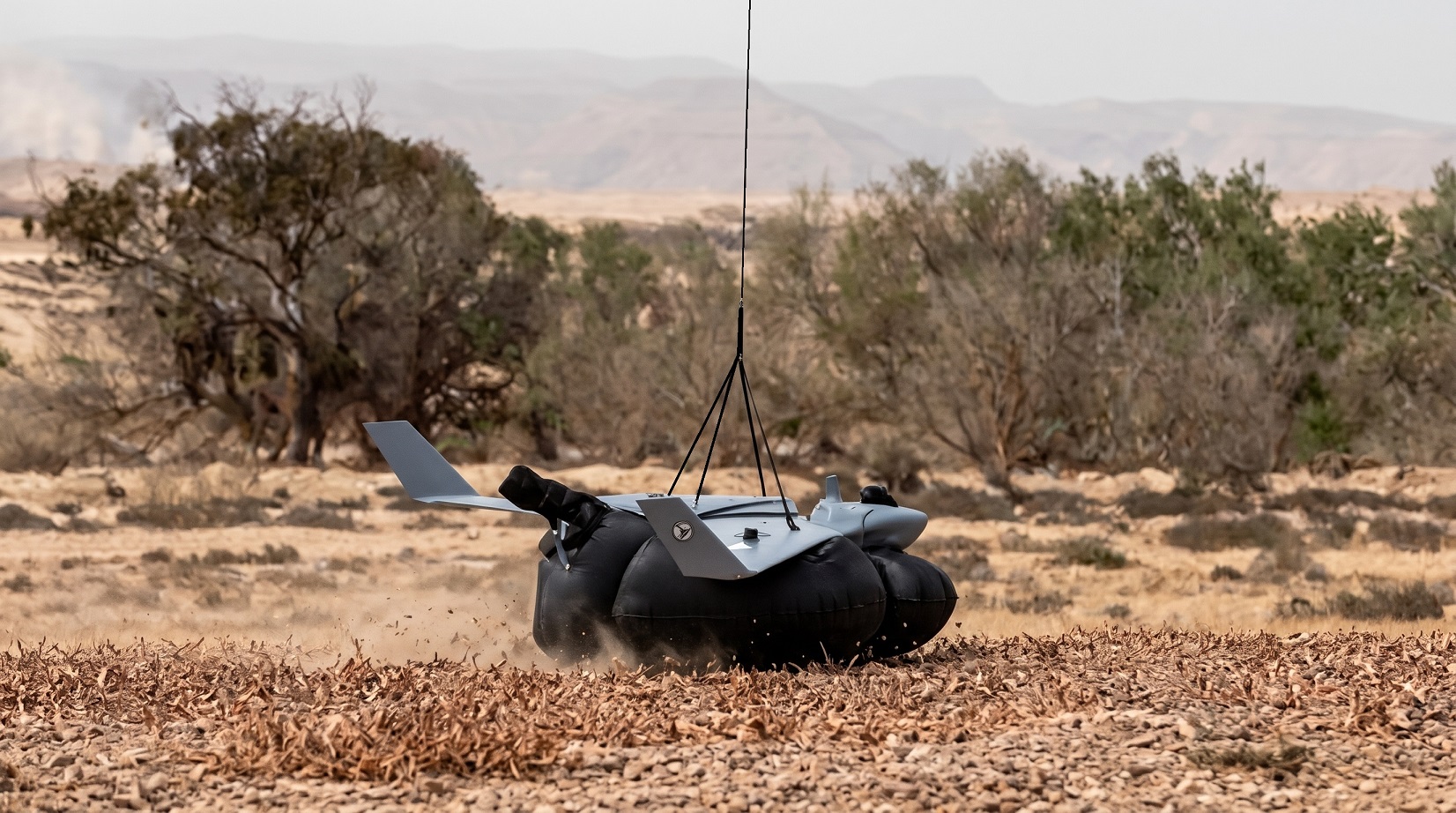
Some fixed-wing UAVs are designed without conventional landing gear. They launch by catapult or another assisted method and use a parachute as the normal way to return the aircraft.
With such platforms, recovery is part of every mission and should be designed using the following parameters:
Aircraft weight and geometry
Normal recovery speed
Descent rate
Landing loads
Payload sensitivity
Recovery-area conditions
Repacking and return-to-service requirements
The recovery system becomes part of the aircraft’s normal operating architecture rather than only an emergency backup.
Emergency Recovery When Flight Is Lost
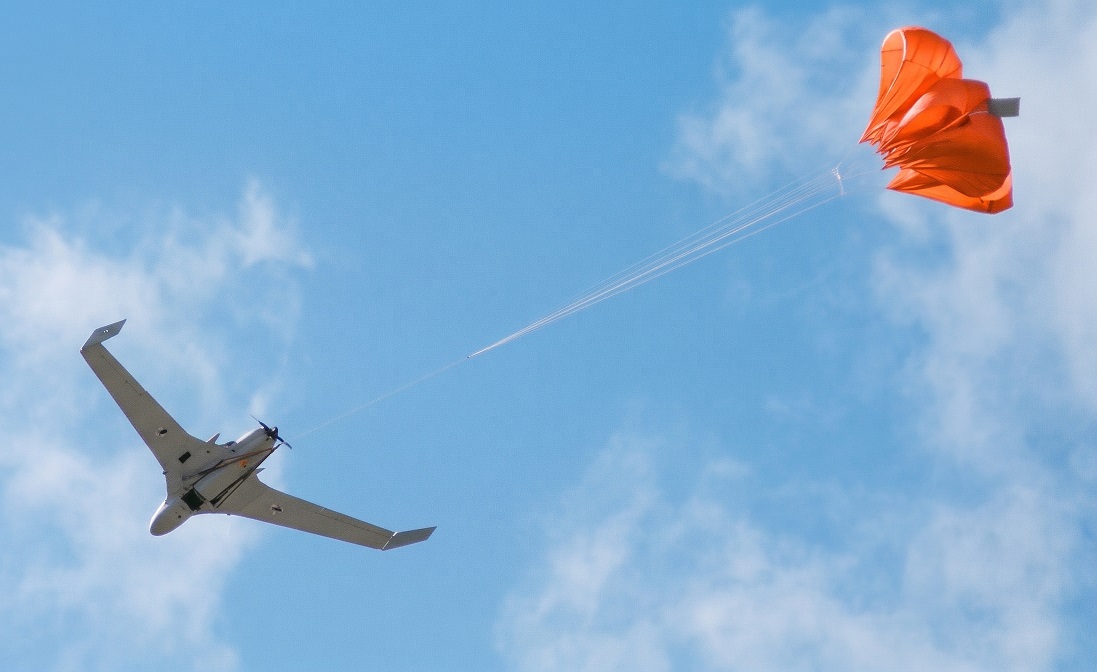
A fixed-wing UAV may also need a parachute when a fault, loss of control or other critical condition prevents a normal return.
Emergency deployment can happen at very different airspeeds and aircraft attitudes, creating demanding conditions for parachute extraction and inflation.
The recovery direction therefore needs to consider:
The aim is to manage the transition from uncontrolled or compromised flight into a recoverable descent.
Manage the Loads Created During Deployment
For a fixed-wing platform, the parachute has to do more than slow the aircraft.
Deployment transfers forces through the canopy, lines, risers, attachment points and airframe. Those loads can affect the structure, electronics and payload the recovery system is intended to preserve.
The system therefore needs to be developed around:
Managing these forces is part of protecting the complete aircraft throughout recovery.
Integrate Recovery Into the Aircraft
Recovery-system integration needs to be considered as part of the UAV architecture.
An internal parachute bay, deployment bag or container must fit within the available space while still allowing clean and reliable deployment.
Integration may include:
Parachute-bay size and location
Door and release arrangement
Deployment bag or container
Attachment interfaces
Available packing volume
Deployment sequence
Avionics or onboard-system interfaces
Access for inspection and repacking
Early coordination helps keep the recovery solution aligned with the aircraft rather than forcing the aircraft to adapt around the parachute later.
Built Around the Fixed-Wing Mission
The right recovery configuration depends on how the UAV flies, how it is expected to return and what needs to survive that return.
Important inputs can include:
Platform weight and geometry
Payload and critical systems
Normal and emergency recovery scenarios
Flight speed at deployment
Structural limits
Available installation volume
Landing environment
Environmental exposure
Required inspection and maintenance approach
Applicable testing or certification requirements
APCO Aviation Defense develops the recovery textile solution around these platform-specific conditions, supporting both normal landing and emergency recovery applications.
The APCO project journey
From Requirement to Mission Readiness
We work with your team through every stage of the project to deliver reliable, mission-ready solutions.
APCO Aviation Defense works within the standards, certifications, and regulatory frameworks that support defense and aerospace programs.
ISO & AS Certifications
ITAR
EAR
DFARS
NIST
Berry Amendment
Buy American Act
Wassenaar Arrangement
Supplier Partnerships
Offset Program Support
Why APCO Aviation Defense
Fixed-wing recovery requires experience across deployment, aerodynamics and aircraft integration.
APCO Aviation Defense combines more than 50 years of aviation experience with UAV recovery, parachute and defense textile expertise.
Our UAV recovery work spans platforms from under 1 kg to more than 1,000 kg, providing experience across very different aircraft sizes, loads and integration requirements.
That technical range helps APCO develop lightweight, low-bulk recovery systems around the fixed-wing platform, its flight conditions and the critical asset that must return safely.
Mission-led definition
Solutions are shaped around what must be recovered, captured or protected.
Lightweight, low-bulk design
Compact textile solutions help reduce integration burden and support prototypes, small production runs and larger project needs without requiring large batches.
Textile engineering expertise
Net materials, deployment logic and structural behavior are evaluated for the application.
Validation mindset
Selection and development are guided by the operating conditions and the validation required.
Off-the-shelf products
Proven products for recovery, deceleration and delivery
Explore ready product options developed for lightweight recovery, precision airdrop and mission-ready integration.
Find quick answers about our UAV fixed wing solutions, capabilities, and how we work.
Why do fixed-wing UAVs use parachute recovery?
A parachute can serve as the normal landing method for UAVs designed without landing gear or as an emergency recovery system when the aircraft can no longer complete a controlled landing.
Can the same recovery system support normal and emergency landings?
That depends on the platform and its flight envelope. Normal and emergency recovery can create very different deployment speeds, loads and aircraft conditions, which should be considered when defining the system.
Why opening shock is important for fixed-wing UAV recovery?
Parachute inflation transfers loads through the recovery system into the airframe. Managing those forces helps protect the aircraft structure, attachment points, payload and other critical systems.
Can a recovery parachute deploy if the UAV is spinning or in an unusual attitude?
Emergency recovery requirements may include deployment from abnormal aircraft attitudes. The expected conditions need to be defined so the deployment arrangement and recovery system can be developed and tested around them.
When should the parachute system be integrated into the UAV design?
Recovery integration should be considered early enough to define the parachute bay, available volume, attachment points, deployment path and release arrangement around the aircraft architecture.
Can the recovery system connect with the UAV’s avionics?
Depending on the platform, recovery deployment can be connected with onboard sensors or flight-control systems to support automatic activation when predefined emergency conditions are detected.
What information is needed to define a fixed-wing UAV recovery system?
Important inputs include aircraft weight and geometry, payload, flight envelope, deployment speeds, structural limits, available installation volume, landing environment and the condition in which the platform needs to return.