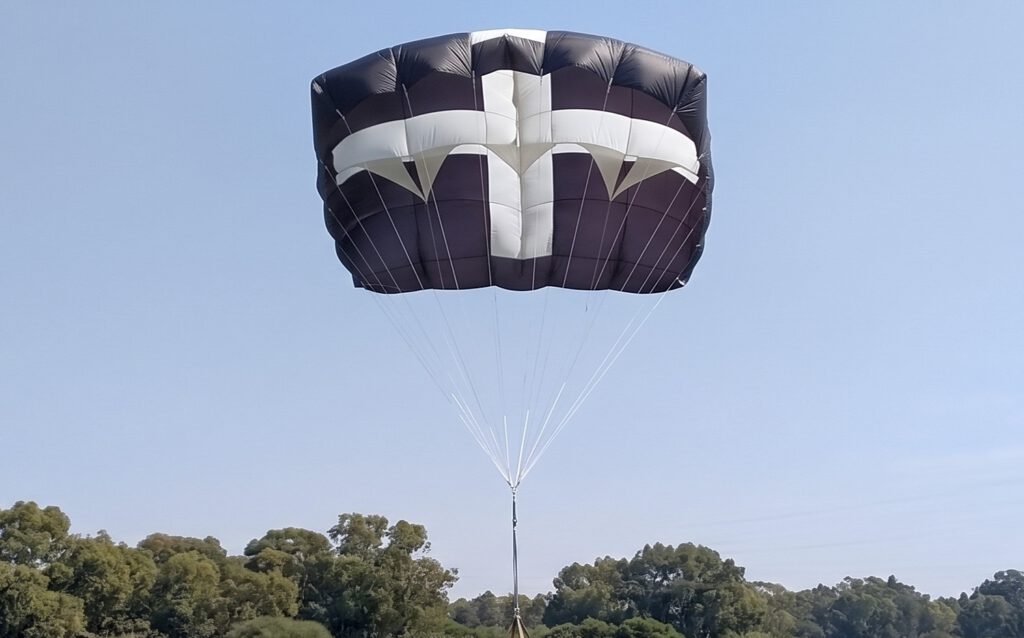
Achieve controlled, precision aerial delivery with RAM Air parachutes designed around your payload, deployment conditions, required glide performance, and landing objectives.
APCO Aviation Defense develops steerable RAM Air parachute solutions for defense, aerospace, aerial delivery, and recovery applications where range, maneuverability, and landing control matter.
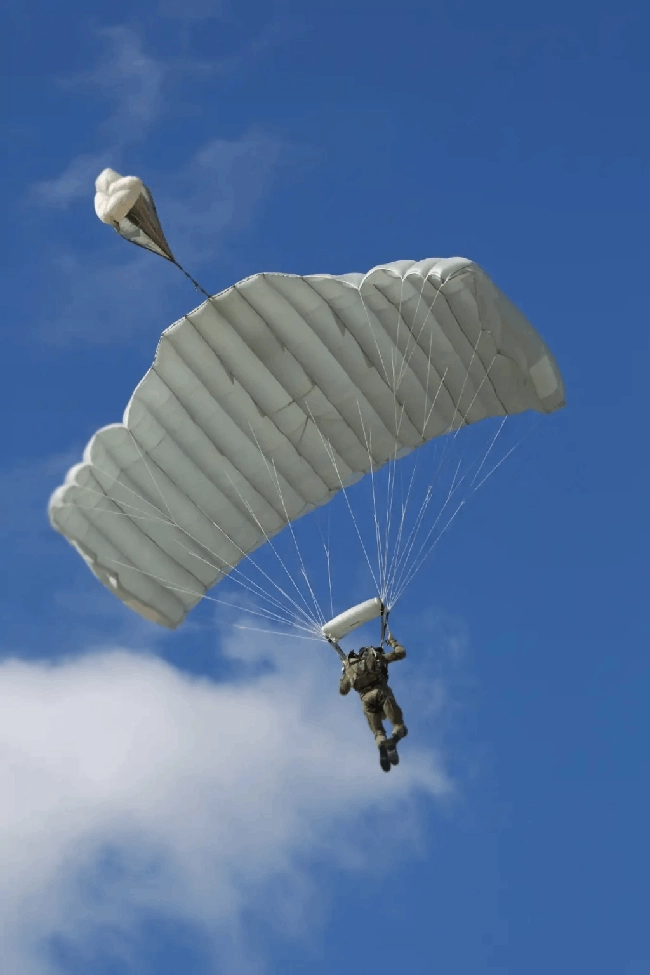
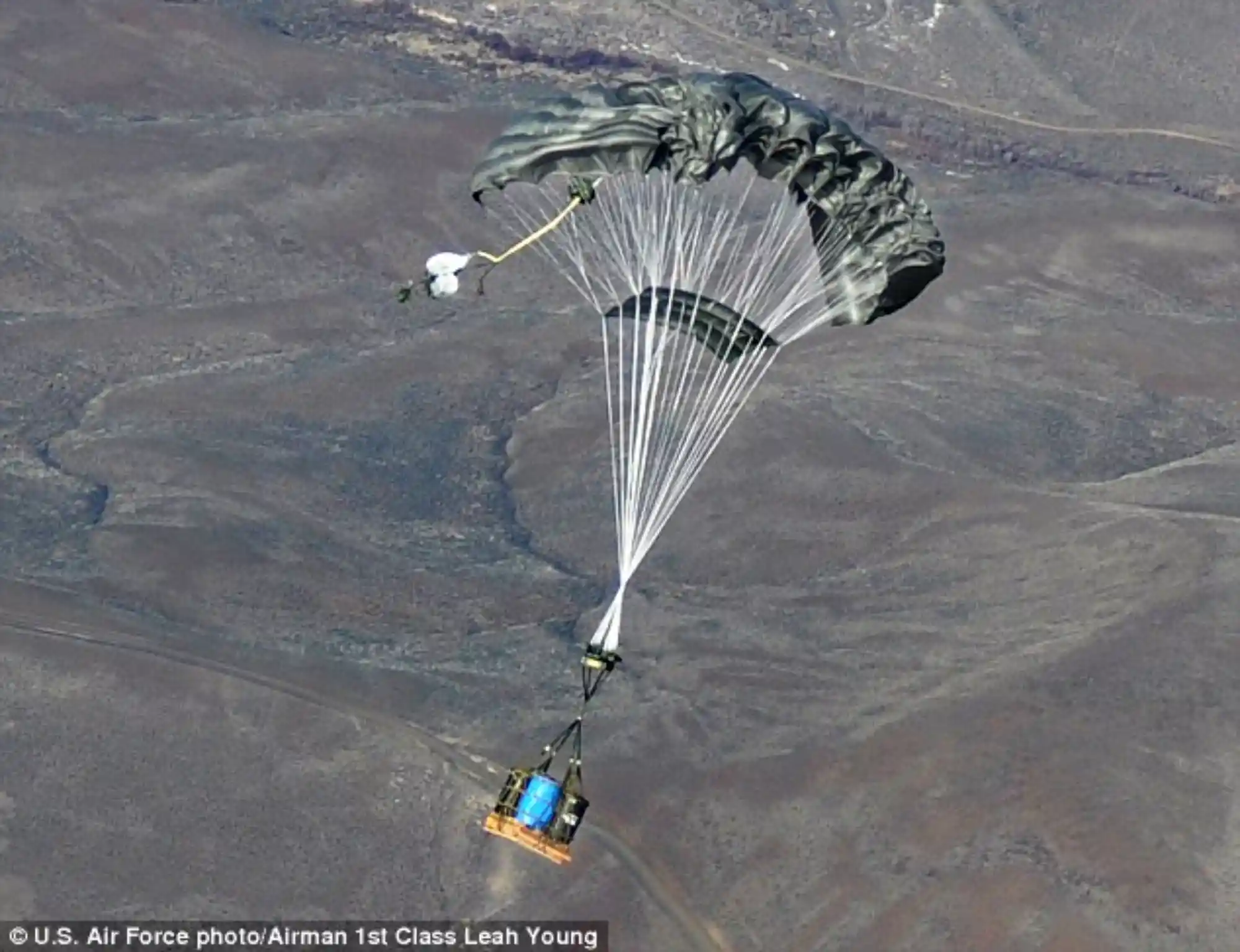
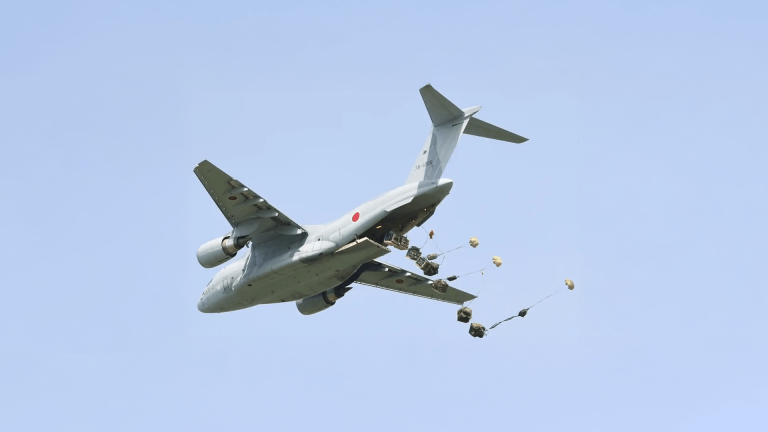
In defense and military applications, RAM Air parachutes are the preferred choice for missions requiring high glide ratio, precision navigation, and steerable flight control. They are commonly used in Joint Precision Airdrop Systems (JPADS) and Guided Precision Aerial Delivery Systems (GPADS), enabling deployment from high altitudes and at significant distances from the target landing zone.
This capability allows aircraft to remain outside high-threat areas while still delivering cargo, equipment, or personnel with pinpoint accuracy.
With a glide ratio of up to 1:10, RAM Air parachutes can cover long distances toward the target while maintaining full maneuverability, directional control, and flare capability for smooth landings.
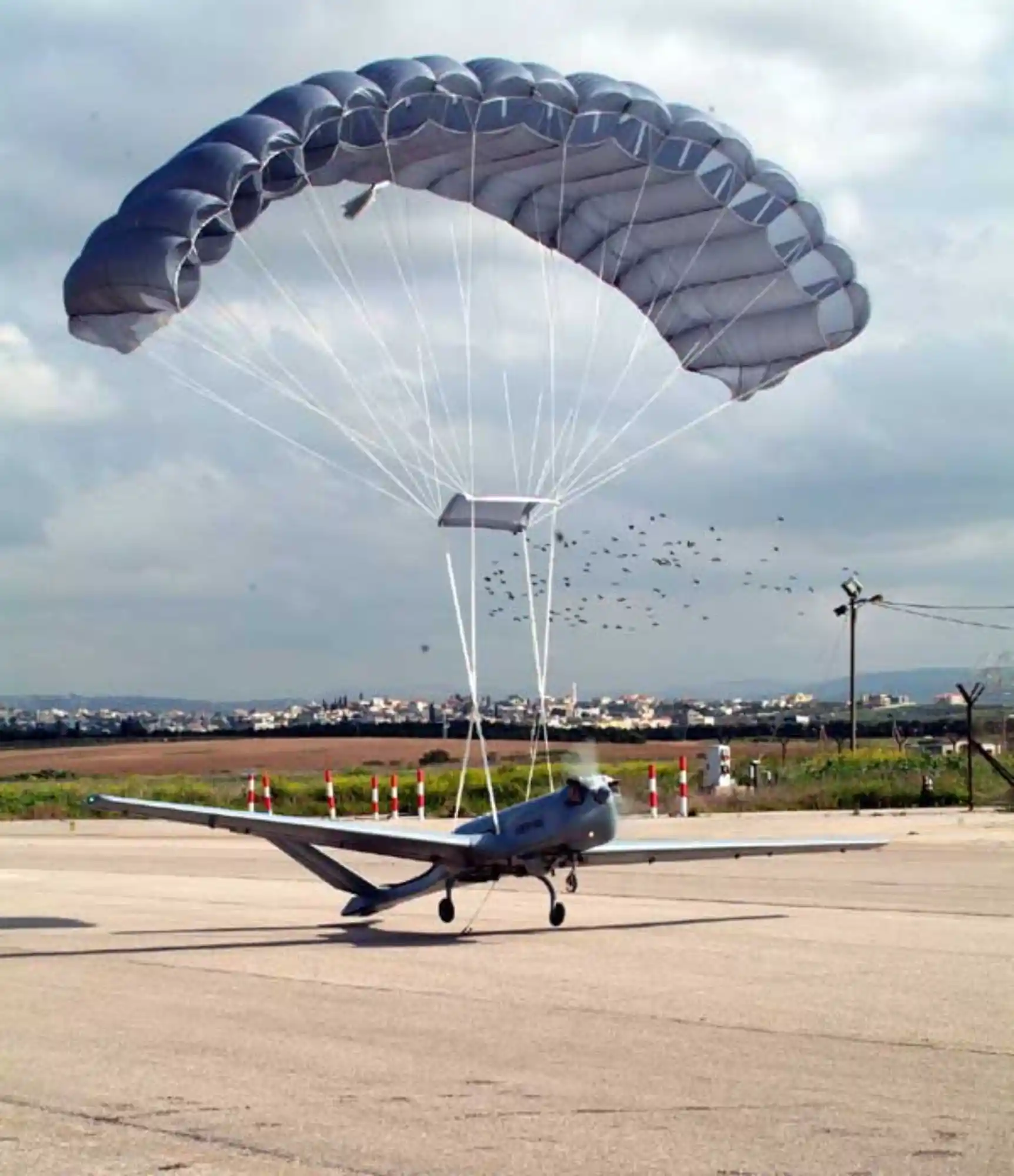
Their steerable nature also makes them suitable for tactical supply drops, UAV recovery operations, and other special missions where precision is critical.
When deployed at high speeds, RAM Air parachutes typically incorporate a slider mechanism to control and prolong canopy inflation.
This system reduces the risk of damage during opening but increases the altitude lost during deployment compared to other parachute types. Proper planning of opening altitude is essential to ensure mission success.
We work with your team through every stage of the project to deliver reliable, mission-ready solutions.
Align on mission needs, operational constraints, and success criteria.
Engineer lightweight, low-bulk solutions built around performance.
Prototype and test to verify reliability and safety.
Manufacture with quality control and timely delivery.
Provide documentation, training, and ongoing support.
APCO Aviation Defense works within the standards, certifications, and regulatory frameworks that support defense and aerospace programs.
APCO Aviation Defense delivers lightweight, high-performance parachutes, inflatables, and recovery systems for UAVs, loitering munitions, and tactical platforms. Backed by 50+ years of aerospace innovation, we provide custom textile solutions from concept to deployment.
Solutions are shaped around what must be recovered, captured or protected.
Compact textile solutions help reduce integration burden and support prototypes, small production runs and larger project needs without requiring large batches.
Net materials, deployment logic and structural behavior are evaluated for the application.
Selection and development are guided by the operating conditions and the validation required.
Explore ready product options developed for lightweight recovery, precision airdrop and mission-ready integration.
Controlled descent solutions for speed reduction and safer recovery.
Steerable canopy solutions for guided descent and improved landing control.
High-performance gliding parachutes for precision recovery and delivery.
Lightweight cruciform and cross parachutes for recovery applications.
Practical guidance on UAV recovery, parachute systems and protective textiles from APCO’s engineering team.
RAM Air parachutes provide steerable, controlled descent for precision aerial delivery, cargo drops, UAV recovery, and defense applications. Their aerodynamic canopy design enables forward glide, maneuverability, and landing control, making them suitable for missions where delivery range and landing accuracy matter.
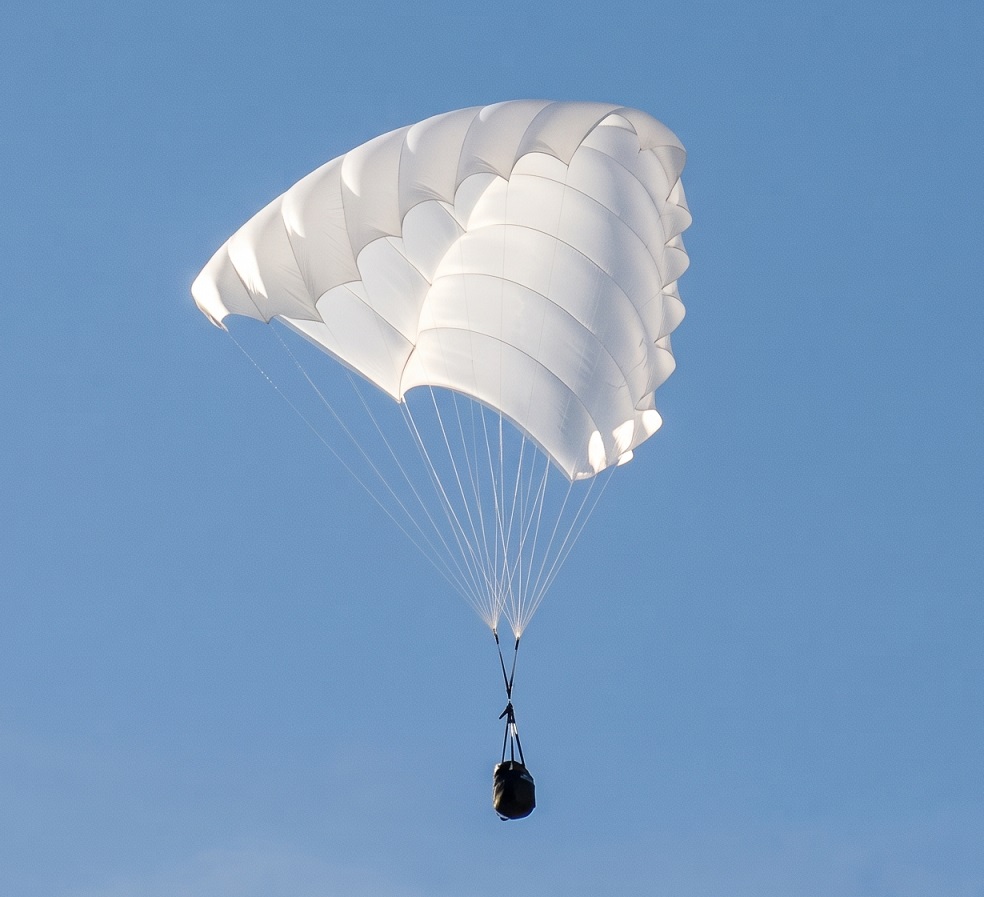
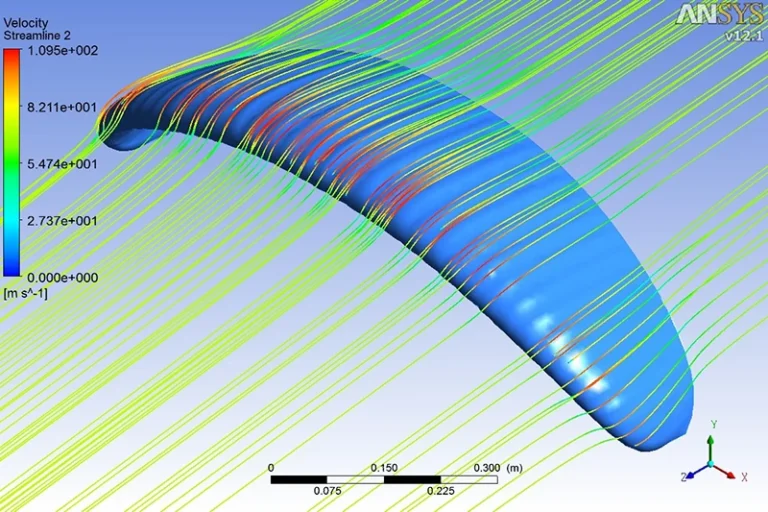
RAM Air parachutes have a wing-shaped canopy that generates forward glide and allows directional control. Round parachutes provide non-guided descent, with horizontal movement determined mainly by wind. RAM Air parachutes are better suited to applications requiring precision navigation, extended range, and controlled landing approaches.
APCO Aviation Defense RAM Air parachutes can achieve glide ratios of up to 1:10, depending on the canopy and operating conditions. This means a parachute may travel up to 10 units horizontally for every unit of altitude lost in suitable conditions. Actual glide distance depends on factors such as wind, payload weight, and flight configuration.
RAM Air parachutes combine glide performance, maneuverability, and steering control, making them suitable for Joint Precision Airdrop Systems (JPADS) and Guided Precision Aerial Delivery Systems (GPADS). These capabilities support stand-off cargo delivery and controlled approaches toward designated landing zones.
High-speed RAM Air parachute deployments typically use slider mechanisms to control canopy inflation and reduce opening forces. Slower inflation helps manage structural loads on the parachute and payload but increases altitude loss during deployment. The available opening altitude must therefore be considered when selecting the recovery or delivery configuration.
Yes. APCO Aviation Defense develops RAM Air parachute solutions around payload requirements, deployment conditions, glide performance, and landing objectives. Canopy design, textile construction, and deployment configuration can be adapted to the application's operational and integration requirements.