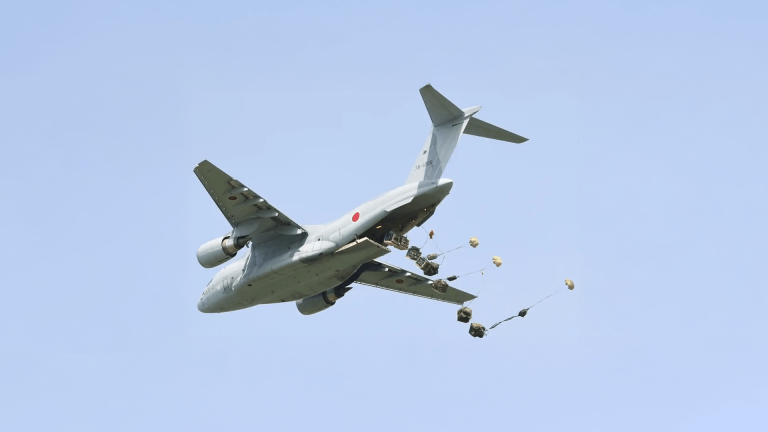
Superior
aerodynamic
performance

4 min read

Contents

Key Takeaways

  • Aerodynamic excellence in ram-air parachute systems comes from the interaction between airfoil design, glide efficiency, stability, maneuverability, and deployment control.
  • APCO Aviation Defense applies more than five decades of sport-aviation experience in paragliders and ultralight aviation to defense and UAV recovery applications.
  • High glide efficiency and predictable steering support longer recovery paths, offset drops, controlled approaches, and improved landing accuracy.
  • Stable canopy behavior and opening-shock management help control the forces acting on the recovered platform and payload throughout deployment and descent.
  • APCO Aviation Defense brings this aerodynamic experience into ram-air parachute systems designed around recovery performance, payload protection, and demanding operational conditions.

At APCO Aviation Defense, we specialize in delivering elite-level aerodynamic performance through our advanced ram-air parachute systems. With over five decades of experience designing world-record-setting paragliders, we bring unmatched expertise in airfoil dynamics, canopy behavior, and flight control. This legacy of innovation gives our defense-grade solutions a performance advantage that’s proven in both testing and real-world operations.

Aerodynamic Excellence Rooted in Sport Aviation

Our background in competitive paragliding and ultralight aviation has shaped the way we engineer our recovery systems. We’ve spent decades perfecting the balance between glide efficiency, stability, and responsive handling-insights that now serve critical defense and UAV applications.
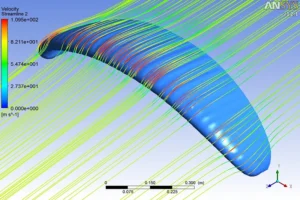
What Sets Our Ram-Air Systems Apart

APCO Aviation Defense’ ram-air parachute systems are engineered for maximum glide, precise maneuverability, and dependable deployment under the most demanding conditions:

  • Exceptional Glide Efficiency: Achieving glide ratios of up to 10:1, our systems allow for long-range recoveries, offset drops, and controlled landings-from high altitudes or in rapid-deployment scenarios.
  • Expertise in Powered Systems: With a legacy in paramotor development, our motorized ram-air parachutes offer extended flight time and mission flexibility for autonomous or crewed systems.
  • Reflex Airfoil Technology: Our reflex-profile wings maintain stability at high speeds and under varied loading conditions-ideal for dynamic environments and fast-response operations.
  • Tuned for Precision: Designed for agile steering and predictable glide paths, our systems help minimize drift, improve landing accuracy, and reduce recovery time.
  • Shock-Managed Deployment: Advanced sliders and reefing systems minimize opening shock to protect both payload and canopy at high deployment speeds.
  • Reliable Descent Stability: Our parachutes deliver smooth, low-pendulum descents that improve payload survivability and data collection.
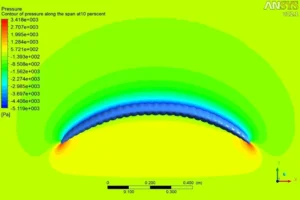
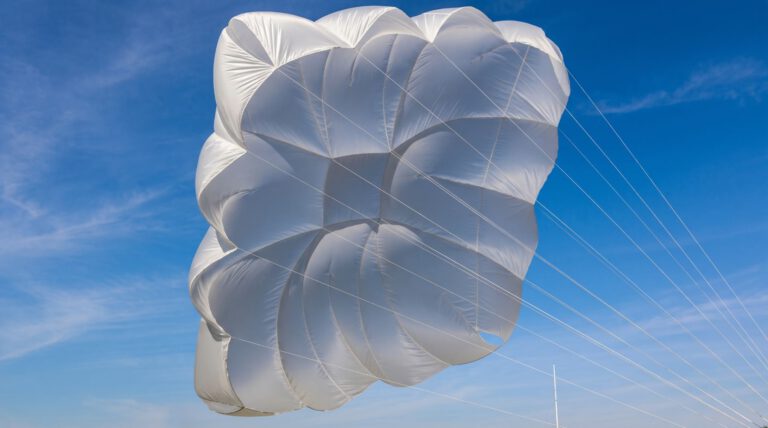
Aerodynamic simulation of a canopy design by APCO Aviation Defense

Proven by Defense Leaders Worldwide

Our background in competitive paragliding and ultralight aviation has shaped the way we engineer our recovery systems. We’ve spent decades perfecting the balance between glide efficiency, stability, and responsive handling-insights that now serve critical defense and UAV applications.

Bottom line:

Superior aerodynamic performance is built through continuous design, testing, observation, and refinement. 

Decades of understanding how canopies behave in flight allow APCO Aviation Defense to apply proven aerodynamic knowledge to defense textile solutions and ram-air parachute systems that support controlled recovery, payload protection, survivability, and critical asset preservation.

FAQ

Frequently
Asked
Questions

Find quick answers about our solutions, capabilities, and how we work.

What gives a ram-air parachute superior aerodynamic performance?

Ram-air parachute performance depends on how the airfoil profile, canopy design, glide efficiency, stability, and steering characteristics work together. APCO Aviation Defense applies experience from paragliding and ultralight aviation to develop ram-air systems designed for efficient glide, predictable handling, and controlled descent.

How does glide efficiency improve ram-air parachute recovery performance?

Glide efficiency determines how much horizontal distance a ram-air parachute can cover while descending. Higher glide performance can support longer-range recovery, offset drops, controlled approaches, and greater flexibility in reaching a suitable landing area.

Why are stability and maneuverability important in ram-air parachute systems?

Stability helps the canopy maintain predictable flight behavior, while maneuverability allows the system to respond to steering inputs and adjust its flight path. Together, these characteristics support greater control during recovery and can help improve landing accuracy.

How does airfoil design affect ram-air parachute performance?

The airfoil profile influences how the canopy generates lift, maintains stability, and responds at different speeds and loading conditions. APCO Aviation Defense draws on its experience with paraglider, paramotor, and reflex-profile wing design when developing aerodynamic solutions for ram-air parachute applications.

How does opening-shock control support aerodynamic recovery performance?

Deployment is part of the complete aerodynamic recovery process. Sliders and reefing systems can help manage how quickly the canopy opens, reducing the loads transferred to the parachute, platform, attachment points, and payload during deployment.

How can superior aerodynamic performance support payload protection?

Glide control, stable descent, predictable steering, and managed deployment all influence the forces and conditions experienced by the platform and payload during recovery. Bringing these factors together can support payload protection, survivability, and critical asset preservation as part of the overall recovery system.

Ready to apply this to your program?

Tell us the mission requirement and our engineers will scope the recovery, protection, or deceleration system with you.