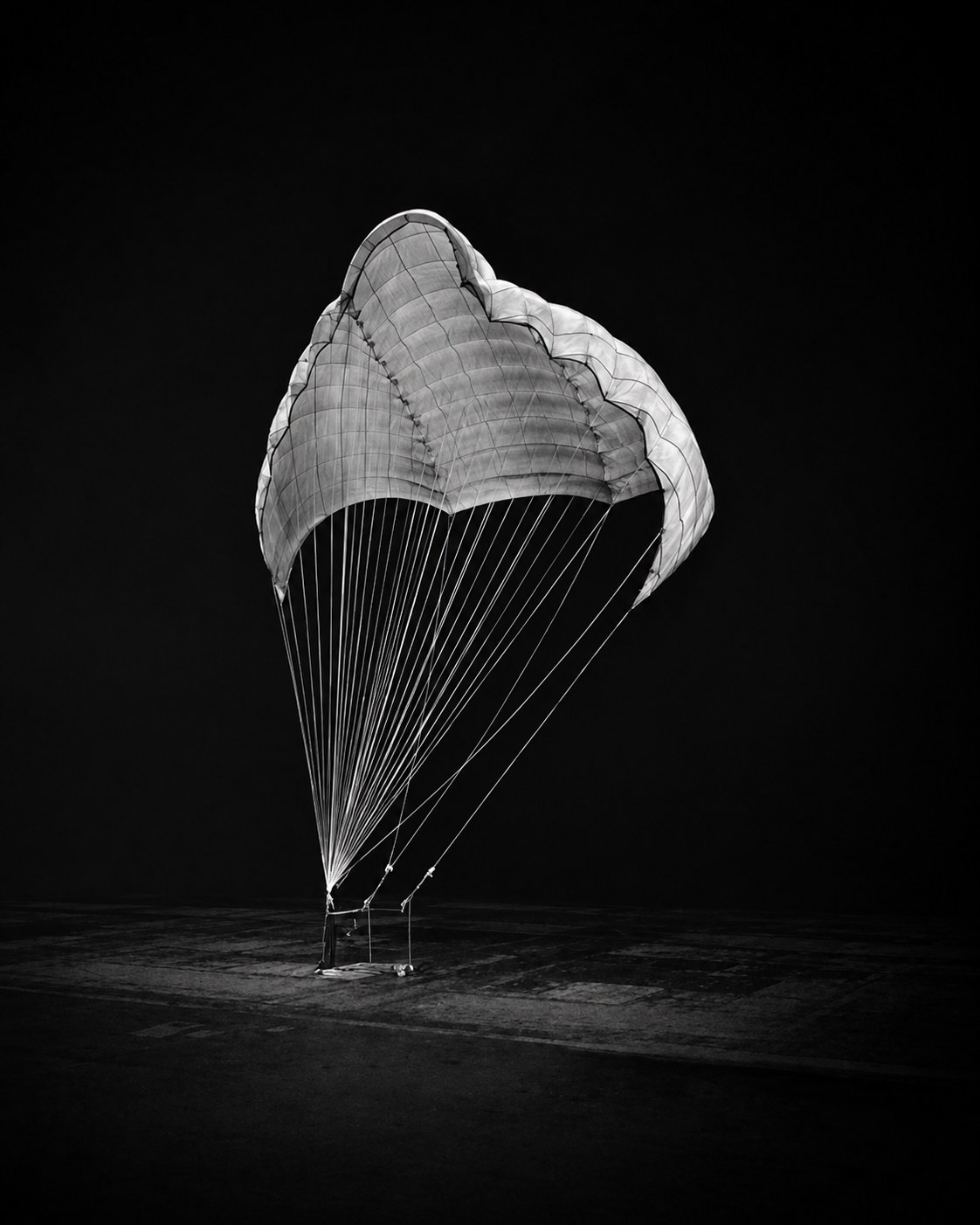
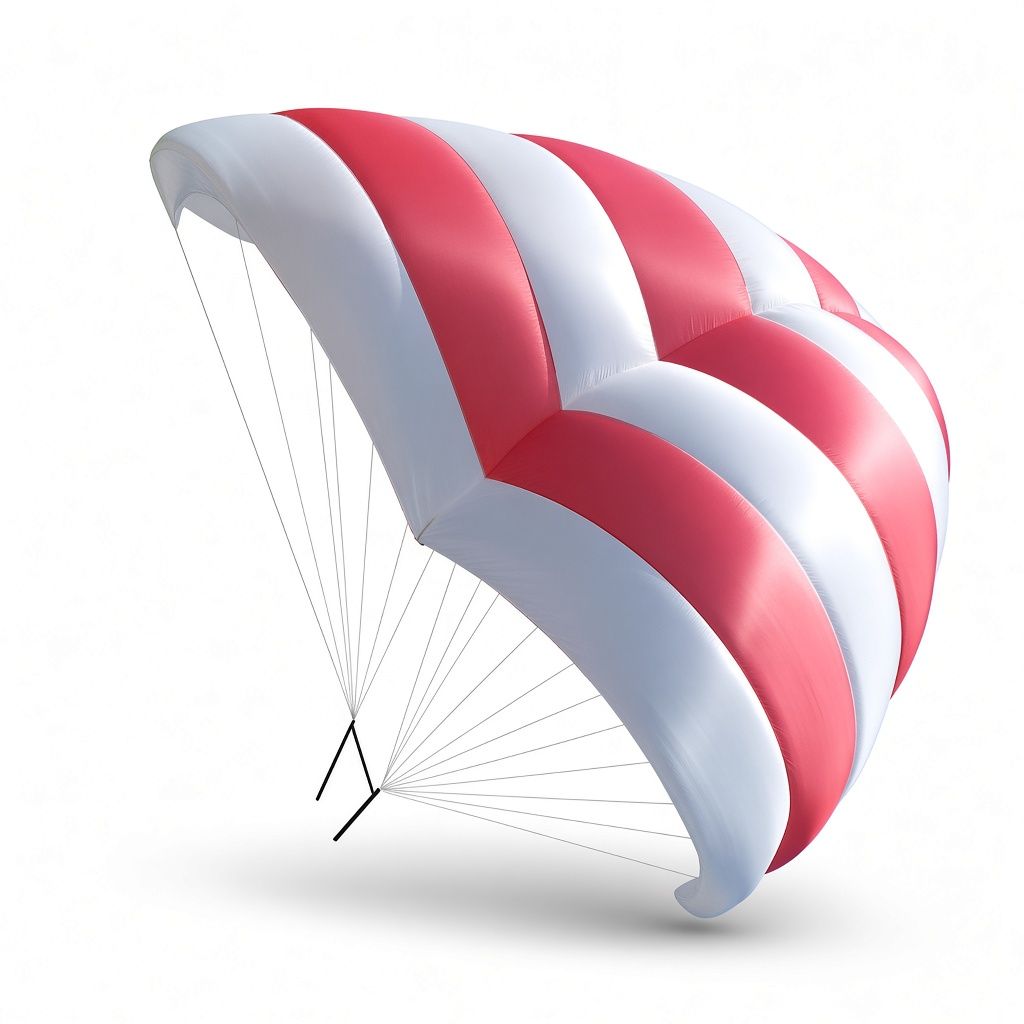
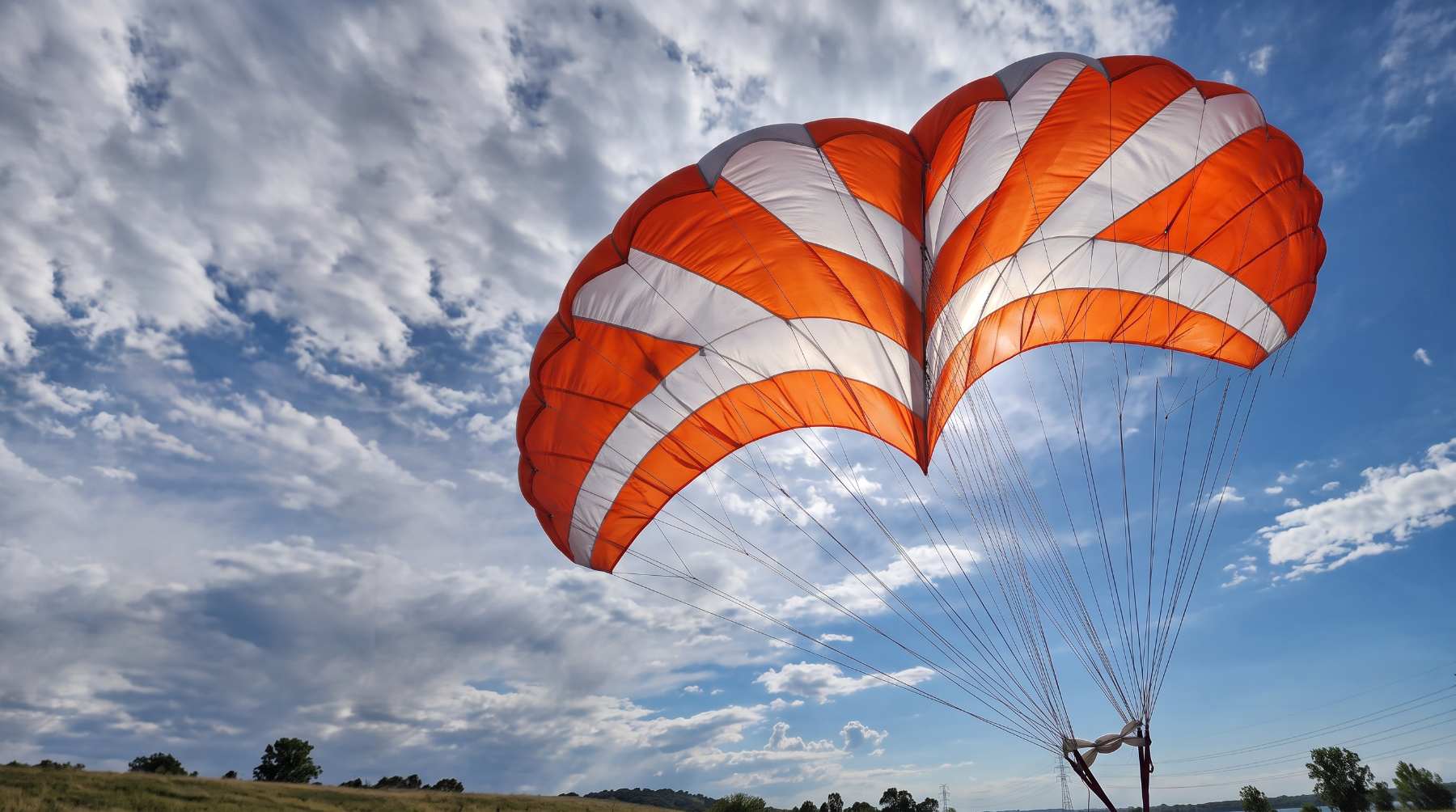
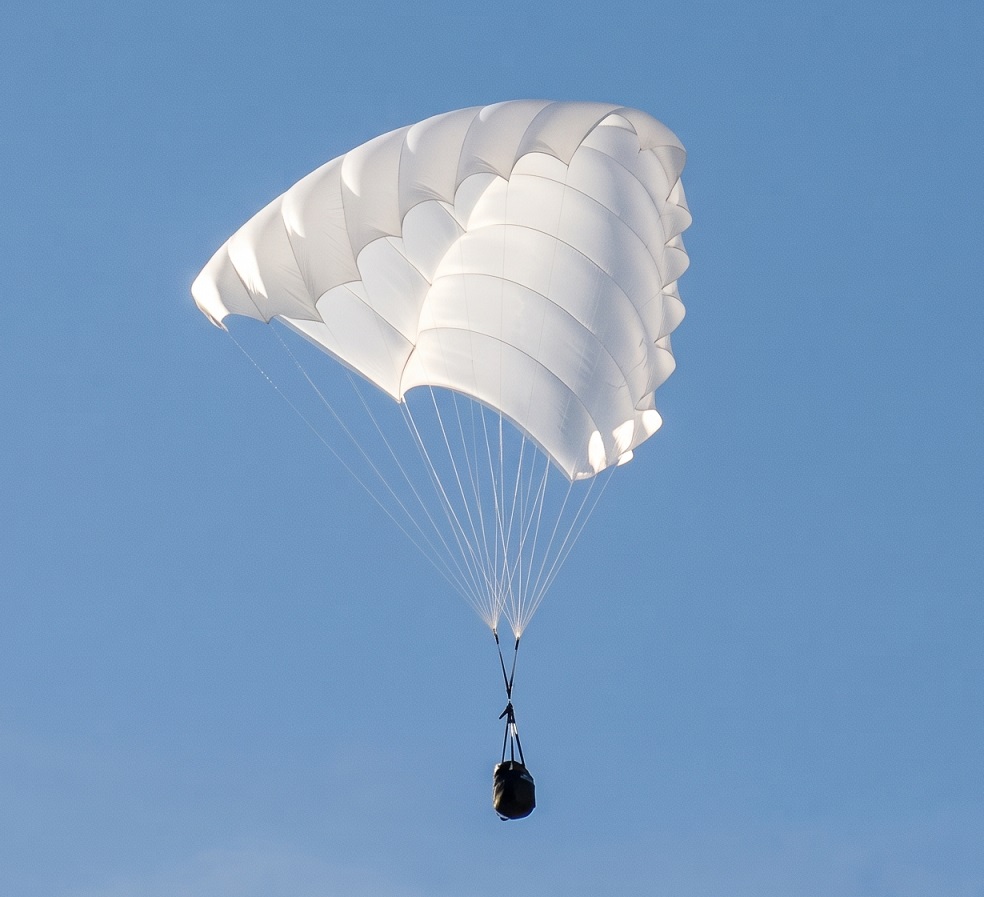
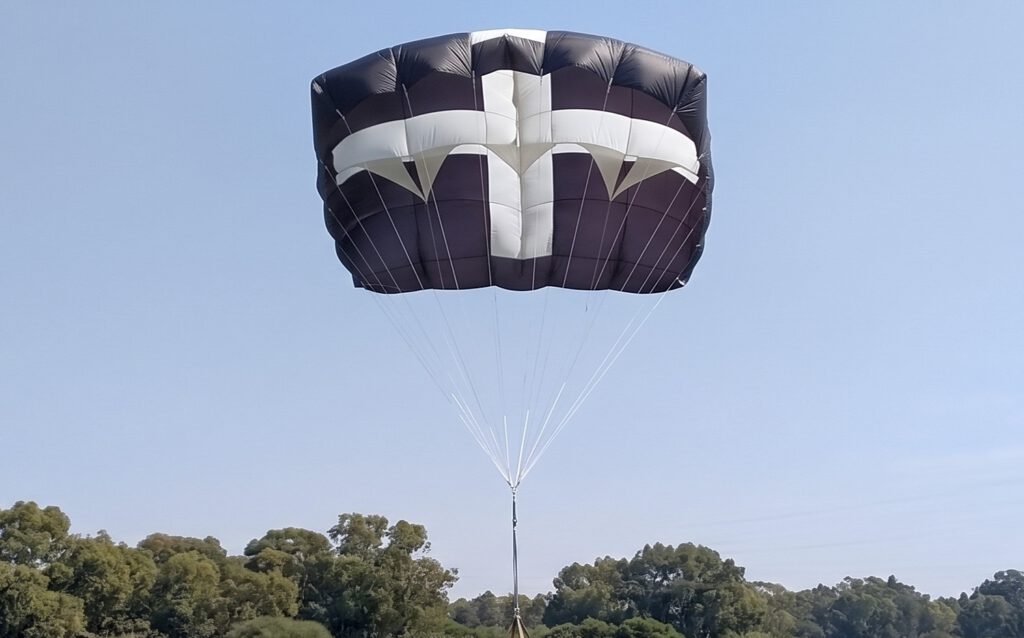
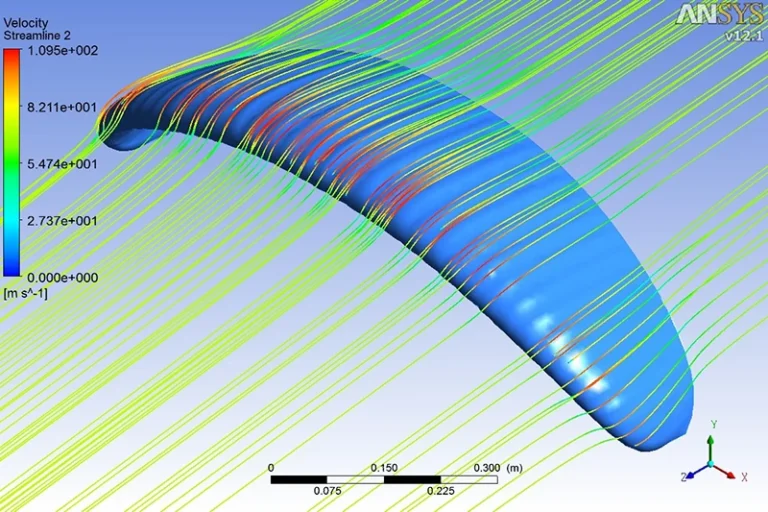
Gliding parachutes are a specialized type of deceleration parachute designed to improve performance by generating both drag and lift. By gliding through the air rather than simply descending, they reduce sink rate and extend horizontal travel, making them ideal for precision landing applications.
Also known as Rogallo-type parachutes, these are constructed from a single layer of high-strength technical fabric with no internal volume. While their glide ratio (L/D) is limited compared to advanced ram-air canopies, they offer the optimal balance between weight, packed volume, and descent rate.
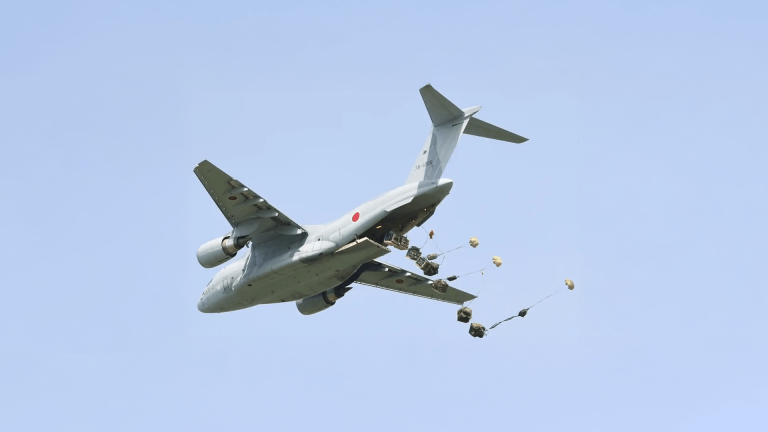
This makes them particularly effective for weight-sensitive platforms such as UAV recovery systems, precision cargo drops, and special forces deployment, where lightweight, low-bulk, and low-volume textile solutions are mission critical.
Trajectory control for landing accuracy – Steerable designs enable precise navigation to the desired touchdown point, even in challenging wind conditions.
Flare capability for impact reduction – At the critical moment before touchdown, the parachute can “flare” by deflecting its trailing edge, momentarily converting forward airspeed into lift. This maneuver improves the lift coefficient of the airfoil, further reducing sink rate and minimizing ground impact forces.
Performance Comparison
When compared to parachutes of equal flat surface area (flat surface meaning the canopy area when laid flat on the ground), well-designed gliding parachutes are typically 20–25% more efficient in reducing sink rate than round parachutes, and 10–15% more efficient than rectangular parachutes.
Applications in Defense and Aerospace
Cargo drops and recovery missions requiring precision landing
UAV and drone recovery systems where lightweight and compact deployment is essential
Steerable emergency parachutes for personnel or equipment
Custom-made textile solutions for specialized deceleration and recovery needs
Military-Grade Gliding Parachutes
APCO Aviation Defense designs and manufactures military-grade gliding parachutes to exacting ISO 9001 standards, using certified, combat-proven materials. Every system is fully traceable from raw material to final deployment, ensuring reliability in mission-critical defense operations.
The APCO project journey
From Requirement to Mission Readiness
We work with your team through every stage of the project to deliver reliable, mission-ready solutions.
APCO Aviation Defense works within the standards, certifications, and regulatory frameworks that support defense and aerospace programs.
ISO & AS Certifications
ITAR
EAR
DFARS
NIST
Berry Amendment
Buy American Act
Wassenaar Arrangement
Supplier Partnerships
Offset Program Support
Why APCO Aviation Defense
Gliding Recovery Backed by Decades of Aviation and Textile Expertise.
APCO Aviation Defense delivers lightweight, high-performance parachutes, inflatables, and recovery systems for UAVs, loitering munitions, and tactical platforms. Backed by 50+ years of aerospace innovation, we provide custom textile solutions from concept to deployment.
Mission-led definition
Solutions are shaped around what must be recovered, captured or protected.
Lightweight, low-bulk design
Compact textile solutions help reduce integration burden and support prototypes, small production runs and larger project needs without requiring large batches.
Textile engineering expertise
Net materials, deployment logic and structural behavior are evaluated for the application.
Validation mindset
Selection and development are guided by the operating conditions and the validation required.
Off-the-shelf products
Proven products for recovery, deceleration and delivery
Explore ready product options developed for lightweight recovery, precision airdrop and mission-ready integration.
Find quick answers about our solutions, capabilities, and how we work.
What is a gliding parachute?
A gliding parachute is a deceleration parachute designed to generate both drag and lift. Unlike a purely non-guided canopy, it can create forward movement during descent and provide greater influence over the return path and landing approach.
What is a Rogallo parachute?
A Rogallo parachute is a single-surface gliding canopy made from high-strength technical fabric. It provides glide and directional control while maintaining relatively low weight and packed volume.
Why use a gliding parachute for UAV recovery?
Gliding parachutes are useful where a UAV or payload needs more control over the return direction than a non-guided parachute can provide. Their combination of glide, steering capability and lightweight construction can support recovery where weight and packing volume are important constraints.
Can a gliding parachute be steered?
Yes. Steerable gliding parachutes can provide trajectory control during descent, helping influence the return direction and approach toward the landing area.
What is landing-flare capability?
A landing flare uses steering input near touchdown to convert part of the canopy’s forward speed into additional lift. This can help reduce sink rate and ground-impact forces when the operating conditions support it.
How does a gliding parachute compare with a ram-air parachute?
A Rogallo-type gliding parachute uses a single-surface canopy and generally provides less glide performance than an advanced multi-cell ram-air canopy. Its advantage is the balance between glide, directional control, low weight and compact textile construction.
What applications are gliding parachutes suited to?
Applications can include UAV and drone recovery, precision cargo drops, steerable emergency parachutes for personnel or equipment, and other recovery missions where lightweight construction, glide and landing control are important.