Recovering a UAV or payload on rocky, forested, sloped, or uneven terrain requires control throughout the landing sequence. Descent speed, horizontal movement, landing orientation, and ground contact all influence whether the platform reaches its final resting position intact.
APCO Aviation Defense develops lightweight, low-bulk defense textile solutions that bring these requirements together. Depending on the platform and operating environment, a rough-terrain recovery system may combine parachutes, steerable canopies, airbags, deceleration systems, and textile-based impact protection.
Why Does Rough Terrain Change UAV Recovery Requirements?
On suitable flat terrain, a platform may dissipate some landing energy by sliding after touchdown. On uneven ground, that same movement can lead to snagging, tumbling, rollover, or collisions with rocks, roots, and other obstacles.
A controlled descent can therefore be followed by damaging ground contact. A wingtip may catch a slope, an exposed sensor may strike a rock, or an inflated canopy may drag the platform after landing.
Rough-terrain recovery design must account for each stage:
- Descent: controlling speed and platform behavior.
- Ground approach: managing direction, orientation, and horizontal movement.
- First impact: absorbing energy and transferring loads.
- Bounce or rollover: limiting secondary impacts.
- Dragging: addressing continued movement after touchdown.
- Final rest: protecting the platform and payload in their resting position.
Evaluating this sequence helps identify where deceleration, impact absorption, or additional protection is required.
Which Systems Can Support Rough-Terrain Recovery?
The recovery architecture depends on platform weight, geometry, payload sensitivity, available packing volume, and expected landing conditions.
APCO Aviation Defense’s approach can include:
| Recovery component | Role in the landing sequence |
|---|---|
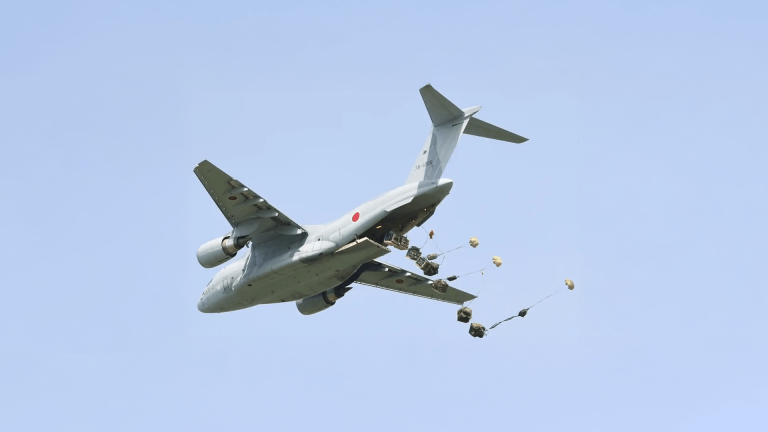
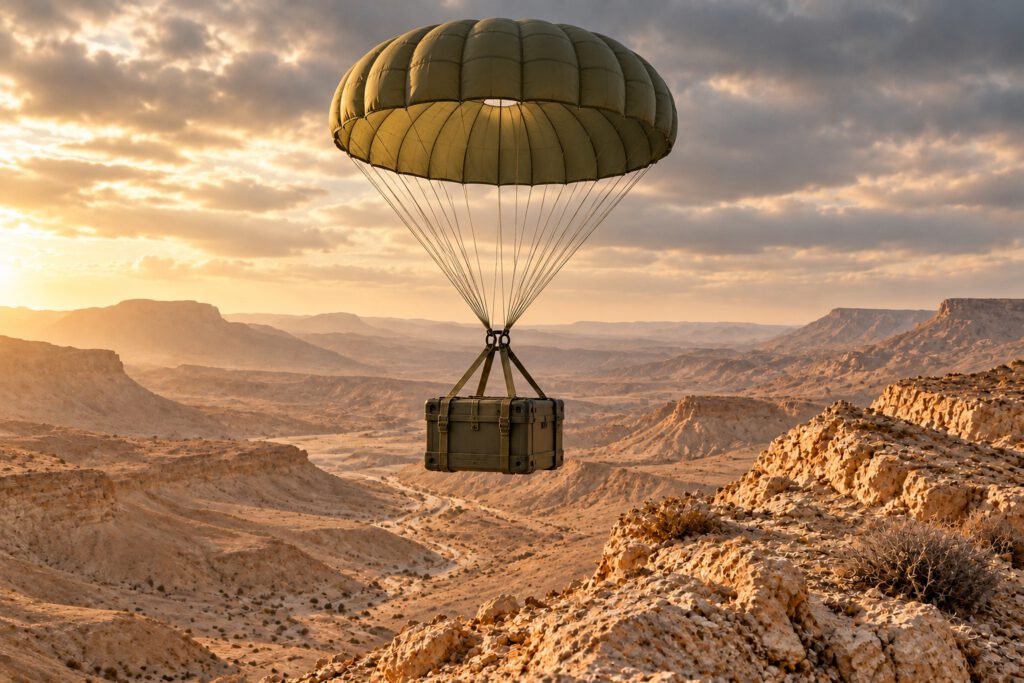
| Parachute-based deceleration | Reduces speed before ground contact |
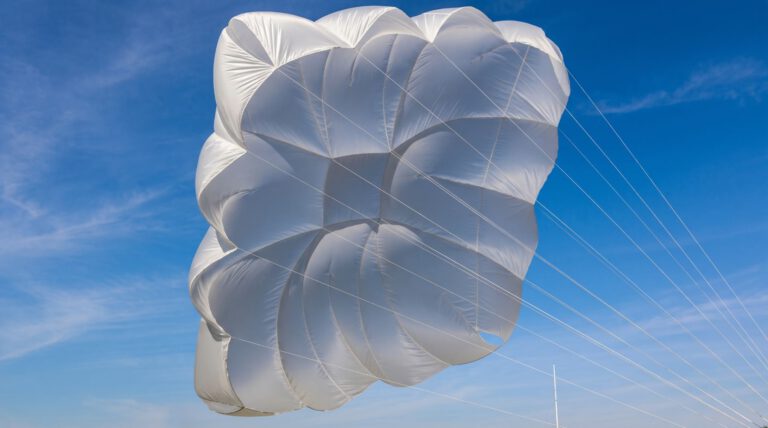
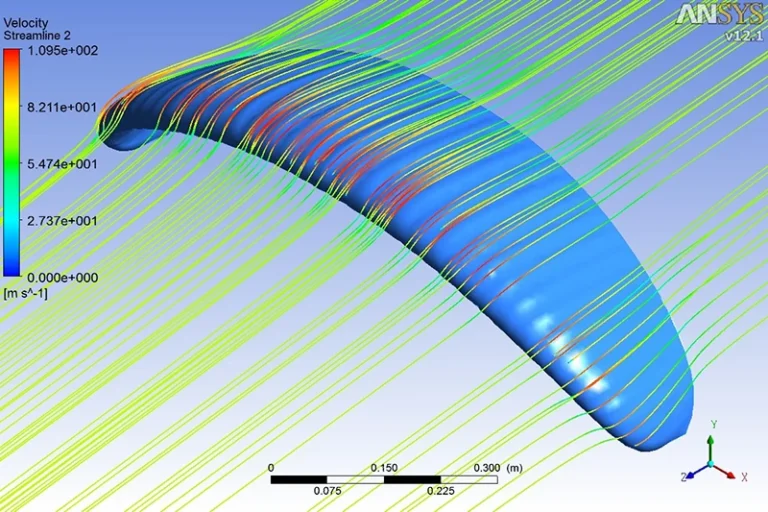
| Steerable ram-air parachutes | Supports approach direction and landing orientation |
| Guided descent and flare | Helps manage the final approach and touchdown speed |
| Airbags and textile energy absorbers | Absorbs landing energy |
| Reinforced contact zones and protective layers | Helps protect areas exposed to impact, abrasion, or puncture |
| Canopy collapse or release mechanisms | Helps limit canopy-driven dragging after touchdown |
| Custom deployment bags and containers | Accommodates packing and deployment requirements |
Some platforms may need a relatively simple parachute-and-protection arrangement. Others require an integrated system combining controlled descent with ground-impact protection.
How Can Vertical and Horizontal Landing Speeds Be Managed?
Reducing vertical descent speed lowers the energy that must be absorbed at touchdown. However, achieving a very low descent rate may require a canopy whose size, weight, or packed volume creates integration challenges.
Horizontal movement introduces another set of loads. A UAV descending at an acceptable vertical speed can still collide with an obstacle or roll over because of its ground speed.
Where appropriate, a steerable parachute can support:
- An approach into the wind.
- Reduced ground-track speed under suitable wind conditions.
- A preferred landing orientation.
- A controlled final approach.
- Flare-assisted speed reduction before touchdown.
These capabilities must be assessed against the platform, guidance arrangement, wind envelope, and available approach space. Together, they can help manage landing energy while balancing canopy size and integration requirements.
What Role Do Airbags Play in Ground-Impact Protection?
Airbags can absorb energy during ground contact, including impacts with vertical and horizontal components. Their performance depends on how they are shaped, attached, protected, and integrated with the platform.
Attachment geometry is particularly important. A limited connection area can allow an airbag to deform into a rounded shape during impact, potentially increasing rollover risk. A wider, shallower arrangement with a larger connection area may improve load transfer and stability, depending on the application.
Airbag design should address:
- Energy absorption: the loads and impact conditions the system must accommodate.
- Attachment interfaces: how forces transfer into the platform structure.
- Stability: how the platform behaves during first contact and subsequent movement.
- Venting: how pressure is managed during compression.
- Surface protection: resistance to abrasion, puncture, and contact with obstacles.
Considering these requirements early gives the recovery system and platform structure room to develop together.
How Does APCO Aviation Defense Develop a Rough-Terrain Recovery System?
1. Define the Landing Environment
The project begins with terrain, wind, slopes, obstacles, landing-zone uncertainty, and expected ground conditions. These factors establish the conditions the recovery system must address.
2. Assess the Platform and Payload
APCO Aviation Defense reviews platform weight, geometry, payload sensitivity, exposed components, available packing volume, and attachment points. This assessment connects recovery requirements to practical integration constraints.
3. Establish the Recovery Requirements
The team defines the required descent rate, parachute type, steering capability, landing orientation, and ground-impact protection. Vertical and horizontal speed requirements guide the recovery concept.
4. Design and Integrate the Components
The canopy, deployment system, airbag, textile protection, and attachment interfaces are developed around the platform and its intended operating conditions.
5. Prototype and Validate
Testing may address vertical and angled impacts, horizontal movement, rollover, abrasion, puncture exposure, canopy dragging, and post-impact functionality. Following validation, APCO Aviation Defense can support documentation, manufacturing, and production preparation.
What Should the Recovery Development Process Deliver?
A defined recovery concept gives engineering and procurement teams a shared basis for development. Depending on project scope, outputs can include:
- Vertical and horizontal landing-speed requirements.
- Parachute selection and impact-protection concepts.
- Steering and landing-orientation requirements.
- Airbag or structural protection requirements.
- Attachment and integration guidance.
- A testing and validation plan.
- Documentation supporting the transition toward production.
These outputs help teams evaluate the recovery system against measurable requirements.
What Expertise Does APCO Aviation Defense Bring to Rough-Terrain Recovery?
APCO Aviation Defense develops custom defense textile solutions spanning UAV recovery, parachutes, airbags, deceleration mechanisms, and deployment systems.
Its experience includes steerable and non-steerable parachutes, opening-shock control, deployment bags and containers, and lightweight integration for platforms ranging from under 1 kg to more than 1,000 kg.
This breadth supports projects in which canopy performance, impact protection, platform geometry, and terrain must be evaluated together. The recovery concept can be developed around the complete landing event, from deployment through final ground contact.
Define Your Rough-Terrain Recovery Project
Start with the platform and the conditions it must land in. Share your UAV or payload weight, geometry, expected terrain, wind conditions, packing constraints, and protection requirements with APCO Aviation Defense. Our team can help define the recovery concept, integration priorities, and validation work needed to move your project forward.