Home → Solutions → Helicopters uav parachute system engineering
RECOVERY & RETRIEVAL
Helicopter UAV Recovery System
Clear the rotor. Control the descent.
Protect the platform.
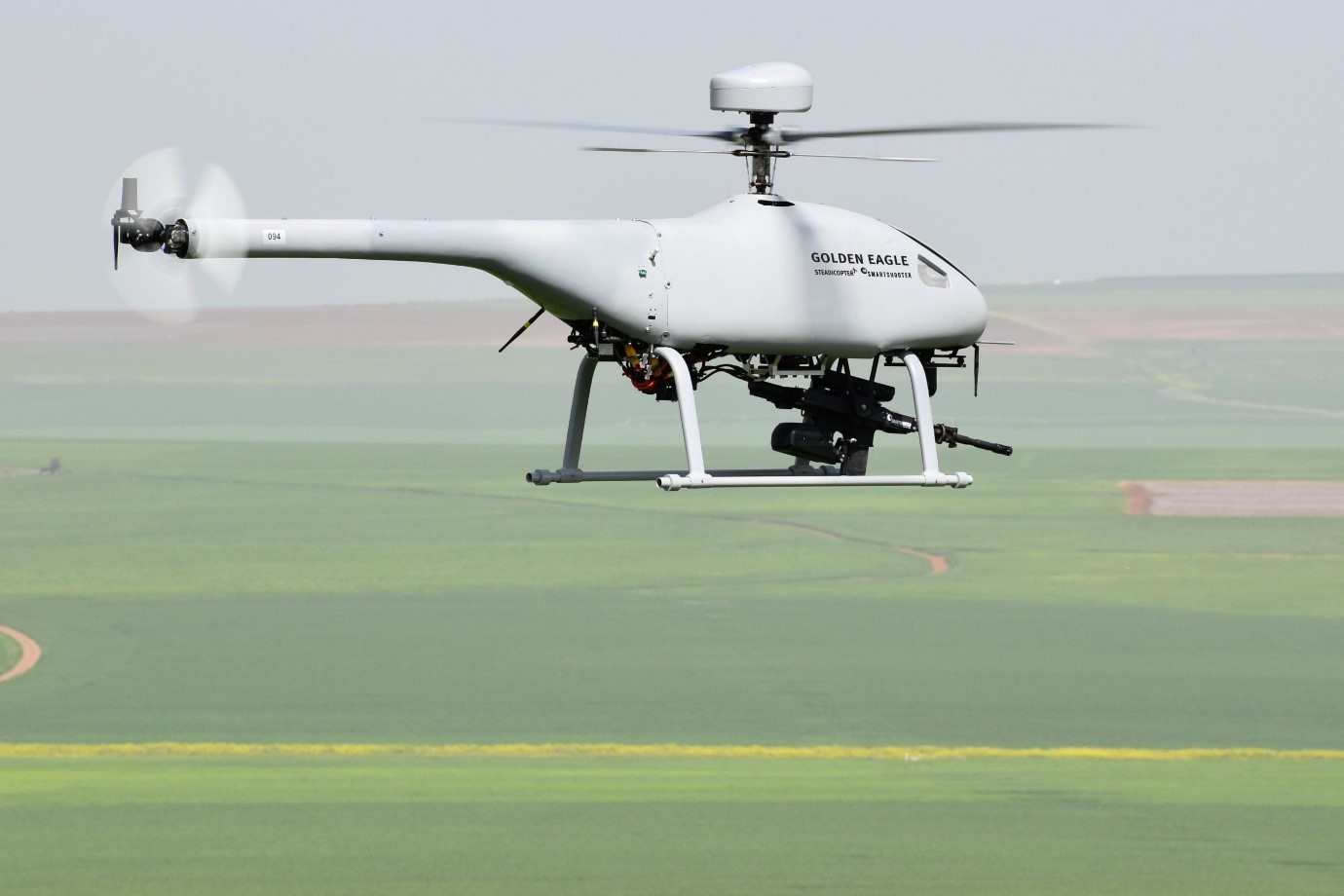
Helicopter UAVs create a distinct recovery challenge. The parachute must deploy clear of the rotor system and tail structures, move through strong rotor downwash, and inflate under the flight conditions in which recovery is initiated.
APCO Aviation Defense develops lightweight, low-bulk UAV recovery textile solutions around the helicopter’s geometry, flight envelope, payload, deployment path and required return condition — helping preserve the platform and critical payload when normal flight recovery is no longer available.
Helicopters are VTOL aircraft, but their rotor systems create a different recovery environment from conventional multirotor or fixed-wing UAVs.
The recovery system needs to account for:
Main rotor clearance throughout parachute deployment
Strong and turbulent rotor downwash, particularly during hover
Tail boom, tail rotor and stabilizer clearance
Different airflow during hover and forward flight
Single, dual and coaxial rotor configurations
Available space for parachute storage and deployment
The aircraft’s ability to autorotate under certain failure conditions
These factors influence where the parachute can be located, how it should leave the aircraft, when recovery should begin and how the canopy can inflate without interfering with the helicopter.
Recovery Designed Around the Rotor and Airframe
The first integration challenge is creating a deployment path that moves the parachute away from the aircraft without crossing the rotor arc or becoming entangled with the tail structure.
Parachute location and deployment direction must take the helicopter geometry in consideration.
Available internal or external installation space
Main and tail rotor position
Tail-boom and stabilizer geometry
Deployment direction and clearance
Attachment points and load distribution
Aircraft center of gravity
Parachute extraction and inflation sequence
Opening loads transferred into the airframe
Top, aft or side deployment arrangements may be considered depending on the specific helicopter configuration. The appropriate direction must be defined around the aircraft rather than independently of it.
Managing Downwash, Deployment and Opening
Rotor downwash can create one of the most difficult conditions in helicopter parachute recovery.
During hover, the parachute may initially deploy into strong disturbed airflow generated by the rotor. During forward flight, the same recovery system must operate within a combination of rotor flow and translational airflow.
The deployment system therefore needs to create sufficient separation between the parachute and aircraft before full canopy inflation.
Depending on the configuration, development considerations may include:
Rapid parachute extraction
Pilot chutes or other stabilization methods
Deployment sleeves or other deployment-control methods
Reefing or inflation-control mechanisms
Opening-shock management
Load distribution through the risers and attachment structure
The objective is to establish useful deceleration while keeping the deployment trajectory and resulting loads compatible with the helicopter and its payload.
The APCO project journey
From Requirement to Mission Readiness
We work with your team through every stage of the project to deliver reliable, mission-ready solutions.
Align on mission needs, operational constraints, and success criteria.
02
Design & Develop
Engineer lightweight, low-bulk solutions built around performance.
03
Test & Validate
Prototype and test to verify reliability and safety.
04
Produce & Deliver
Manufacture with quality control and timely delivery.
05
Support & Sustain
Provide documentation, training, and ongoing support.
Trust & Compliance
Trusted in Mission-Critical Environments
APCO Aviation Defense works within the standards, certifications, and regulatory frameworks that support defense and aerospace programs.
ISO & AS Certifications
ITAR
EAR
DFARS
NIST
Berry Amendment
Buy American Act
Wassenaar Arrangement
Supplier Partnerships
Offset Program Support
Why APCO Aviation Defense
Helicopter recovery depends on rotor clearance and airflow.
APCO Aviation Defense combines decades of human-carrying aviation and parachute experience with the development of lightweight, low-bulk recovery systems for UAV platforms.
Our approach considers the conditions that make helicopter recovery different, including rotor downwash, main- and tail-rotor clearance, hover and forward-flight deployment, autorotation, opening loads and integration around the airframe.
That experience helps us develop UAV recovery textile solutions around the actual helicopter configuration, flight envelope and the critical asset that must return safely.
Mission-led definition
Solutions are shaped around what must be recovered, captured or protected.
Lightweight, low-bulk design
Compact textile solutions help reduce integration burden and support prototypes, small production runs and larger project needs without requiring large batches.
Textile engineering expertise
Net materials, deployment logic and structural behavior are evaluated for the application.
Validation mindset
Selection and development are guided by the operating conditions and the validation required.
Off-the-shelf products
Proven products for recovery, deceleration and delivery
Explore ready product options developed for lightweight recovery, precision airdrop and mission-ready integration.
Find quick answers about our solutions, capabilities, and how we work.
Why uav helicopter recovery using a parachute is different?
The main rotor, rotor downwash, tail structures and changing airflow between hover and forward flight directly affect parachute placement and deployment. The recovery system therefore needs to be developed around the specific helicopter geometry and operating envelope.
How can a parachute deploy without hitting the helicopter rotor?
The parachute location, extraction direction and deployment trajectory need to be defined around the rotor arc and aircraft structure. The objective is to create sufficient separation from the helicopter before full canopy inflation.
How does rotor downwash affect helicopter UAV parachute deployment?
Rotor downwash creates strong disturbed airflow around the aircraft, particularly during hover. The recovery system must establish sufficient separation so the parachute can move away from the helicopter and begin controlled inflation.
Can the same helicopter UAV recovery system work in hover and forward flight?
The same recovery architecture may need to operate under both conditions, but the airflow is different. Hover creates strong rotor-driven airflow with little forward airspeed, while forward flight adds translational airflow. Both conditions should therefore be considered during development and validation.
How does autorotation affect helicopter UAV recovery design?
Some helicopter configurations may retain the ability to descend through autorotation following certain failures. Recovery logic therefore needs to consider when autorotation remains a viable response and when parachute deployment becomes necessary.
How should a helicopter UAV parachute system be tested?
Testing should reflect the helicopter-specific recovery environment. Relevant evaluations can include rotor-clear deployment, hover deployment in rotor downwash, forward-flight deployment, opening loads and, where applicable, the transition between autorotation and parachute recovery.