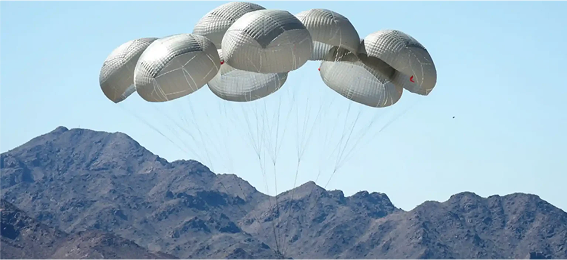
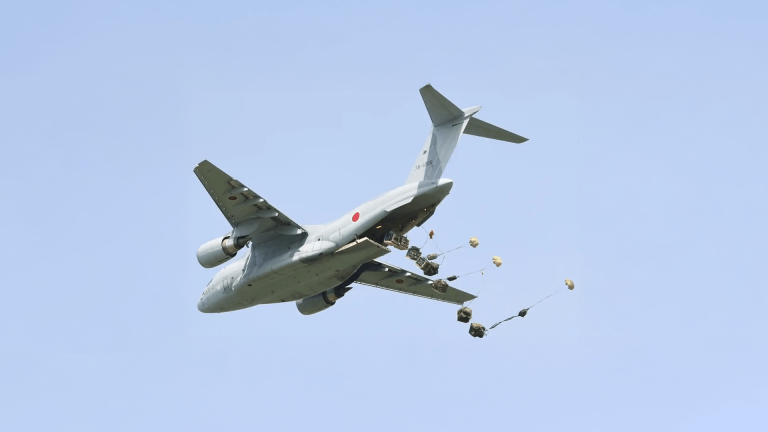
A cost-effective solution that employs multiple smaller, readily available parachutes. By adjusting the number of canopies, descent rates can be finely tuned for various payloads.
Clusters remain valuable in many defense applications because they offer:
Redundancy – If one canopy fails, others can compensate.
Load flexibility – Descent rates can be customized by varying canopy count.
Quick inflation – Especially useful for heavy payloads – inflating faster than one massive canopy.
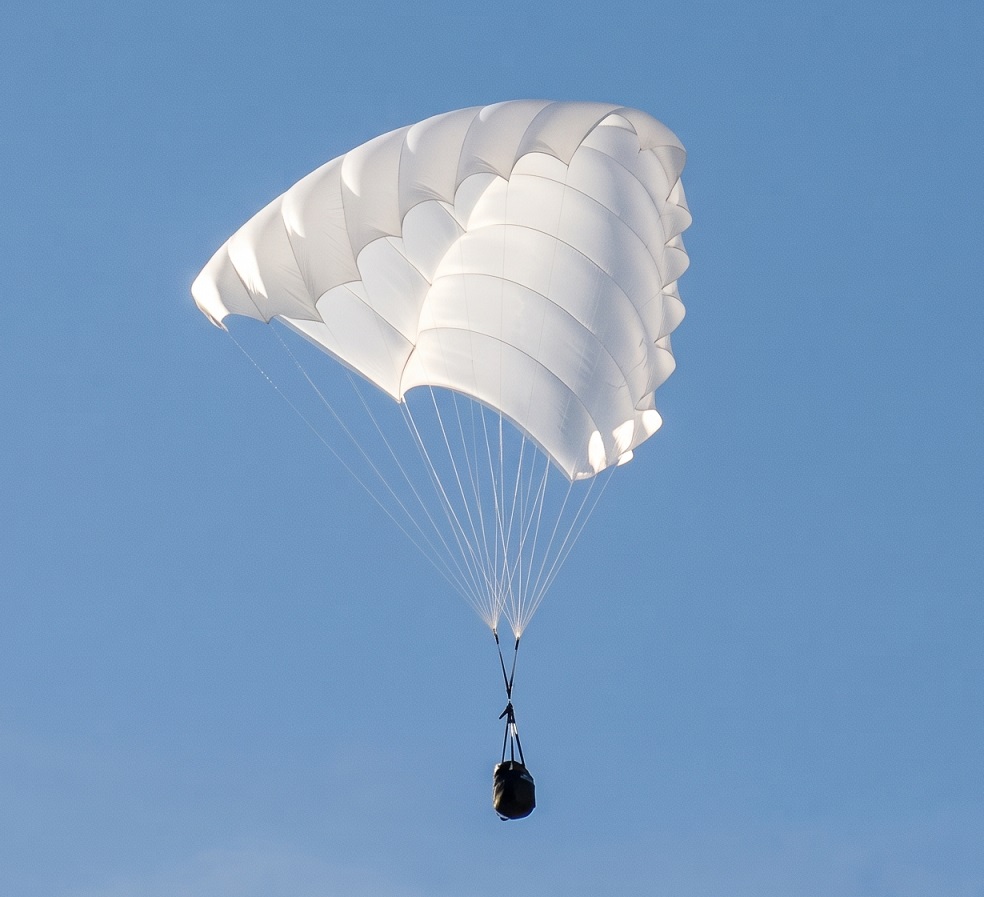
Single Large Parachute
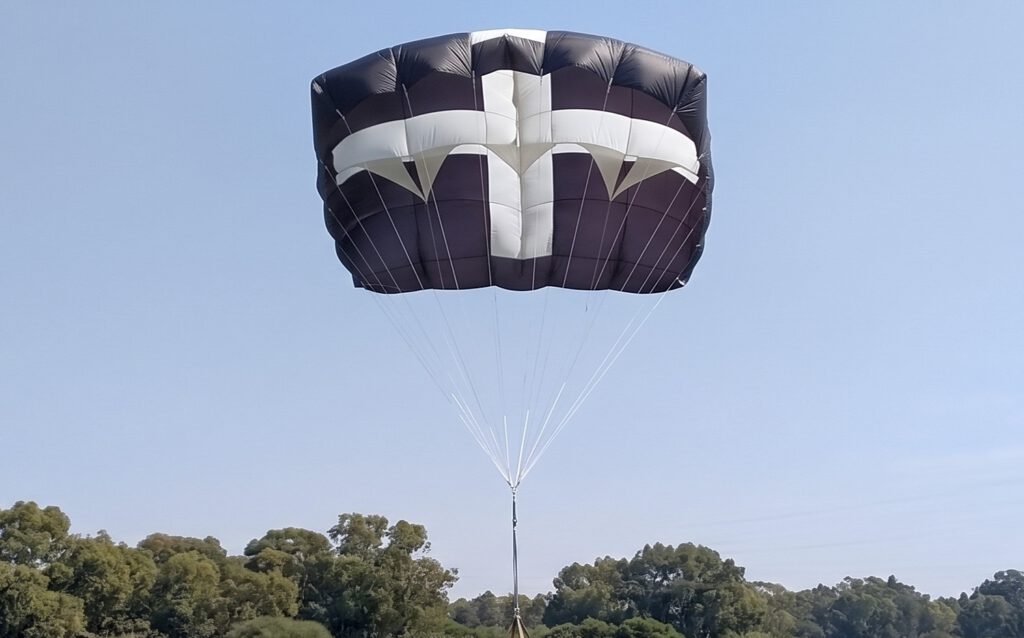
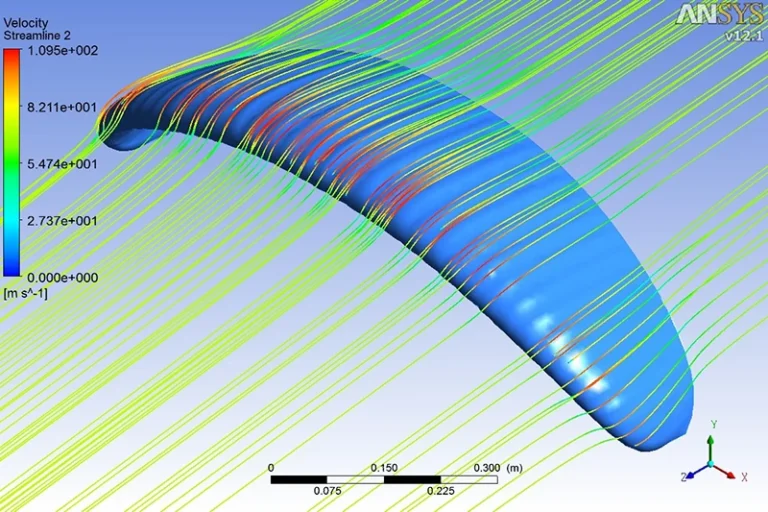
This option features either a robust large canopy for very high payloads or a steerable system such as a parasail or ram-air parachute – when precise landing is required. In advanced systems like GPADS (Guided Precision Aerial Delivery Systems), steerable ram-air parachutes enable highly accurate drops in challenging environments.
Precision delivery capability High-end cargo – like rocket boosters – can now be delivered using a single ram-air parafoil system, offering precise, soft, and safe landings.
Greater descent stability Unlike clusters, which may experience canopy-to-canopy interference, a single parachute ensures smoother, more predictable descent paths with minimal oscillation.
Lower system complexity and cost Fabrication, packing, and recovery are simpler with one canopy. Clusters require additional rigging and can be more expensive and time-consuming to manage.
Lightweight vs. Heavy-Duty Solutions and cost effectiveness
While single large parachutes offer clear advantages, lightweight, low-bulk solutions enable more portable systems. However, they reduce the operational envelope, especially during high-speed drops that risk exceeding material limits. Incorporating systems like decelerating drogue chutes or opening sliders helps mitigate those risks without sacrificing performance.
When dealing with the financial aspect it is important to mention that single time usage parachutes enable a cost effective design that can withstand the same opening forces and have the same functional characteristics as a non disposable parachute.
The APCO project journey
From Requirement to Mission Readiness
We work with your team through every stage of the project to deliver reliable, mission-ready solutions.
APCO Aviation Defense works within the standards, certifications, and regulatory frameworks that support defense and aerospace programs.
ISO & AS Certifications
ITAR
EAR
DFARS
NIST
Berry Amendment
Buy American Act
Wassenaar Arrangement
Supplier Partnerships
Offset Program Support
Why APCO Aviation Defense
Cargo delivery requires experience across deployment, descent and precision landing.
APCO Aviation Defense delivers lightweight, high-performance parachutes, inflatables, and recovery systems for UAVs, loitering munitions, and tactical platforms. Backed by 50+ years of aerospace innovation, we provide custom textile solutions from concept to deployment.
Mission-led definition
Solutions are shaped around what must be recovered, captured or protected.
Lightweight, low-bulk design
Compact textile solutions help reduce integration burden and support prototypes, small production runs and larger project needs without requiring large batches.
Textile engineering expertise
Net materials, deployment logic and structural behavior are evaluated for the application.
Validation mindset
Selection and development are guided by the operating conditions and the validation required.
Off-the-shelf products
Proven products for recovery, deceleration and delivery
Explore ready product options developed for lightweight recovery, precision airdrop and mission-ready integration.
Common questions about cargo parachutes, airdrop configurations and how we support precision delivery programs.
What is the difference between a parachute cluster and a single large parachute?
A parachute cluster uses multiple smaller, readily available canopies, with the descent rate tuned by adjusting the number of canopies. A single large parachute uses one robust canopy – or a steerable system such as a parasail or ram-air parachute – sized to the payload. Both are proven airdrop approaches; the right choice depends on the payload, the accuracy required and the operational constraints.
When is a single large parachute the better choice?
When precision, stability or simplicity drives the requirement. A single ram-air parafoil can deliver high-end cargo – like rocket boosters – with precise, soft landings. One canopy also avoids the canopy-to-canopy interference clusters can experience, giving a smoother, more predictable descent, and fabrication, packing and recovery are simpler with a single canopy.
Why are parachute clusters still used in defense airdrops?
Clusters offer redundancy – if one canopy fails, others can compensate – load flexibility through varying the canopy count, and quick inflation, which is especially useful for heavy payloads. Their main drawback is lead-lag behaviour, where canopies inflate unevenly and load distribution suffers.
What are GPADS and how accurate are guided airdrops?
GPADS (Guided Precision Aerial Delivery Systems) combine a steerable ram-air parachute with guidance to fly the payload to its landing point. They enable highly accurate drops in challenging environments where an unguided descent would scatter loads across a wide area.
Can lightweight cargo parachute systems handle high-speed drops?
Lightweight, low-bulk designs make systems more portable but reduce the operational envelope, especially during high-speed drops that risk exceeding material limits. Incorporating decelerating drogue chutes or opening sliders mitigates those risks without sacrificing performance.
How do we start a cargo parachute project with APCO Aviation Defense?
Use the Define your project form or contact our team directly. A short description of the payload, the drop conditions and the required landing accuracy is enough for a first review; we then come back with questions, options and a proposed way forward.