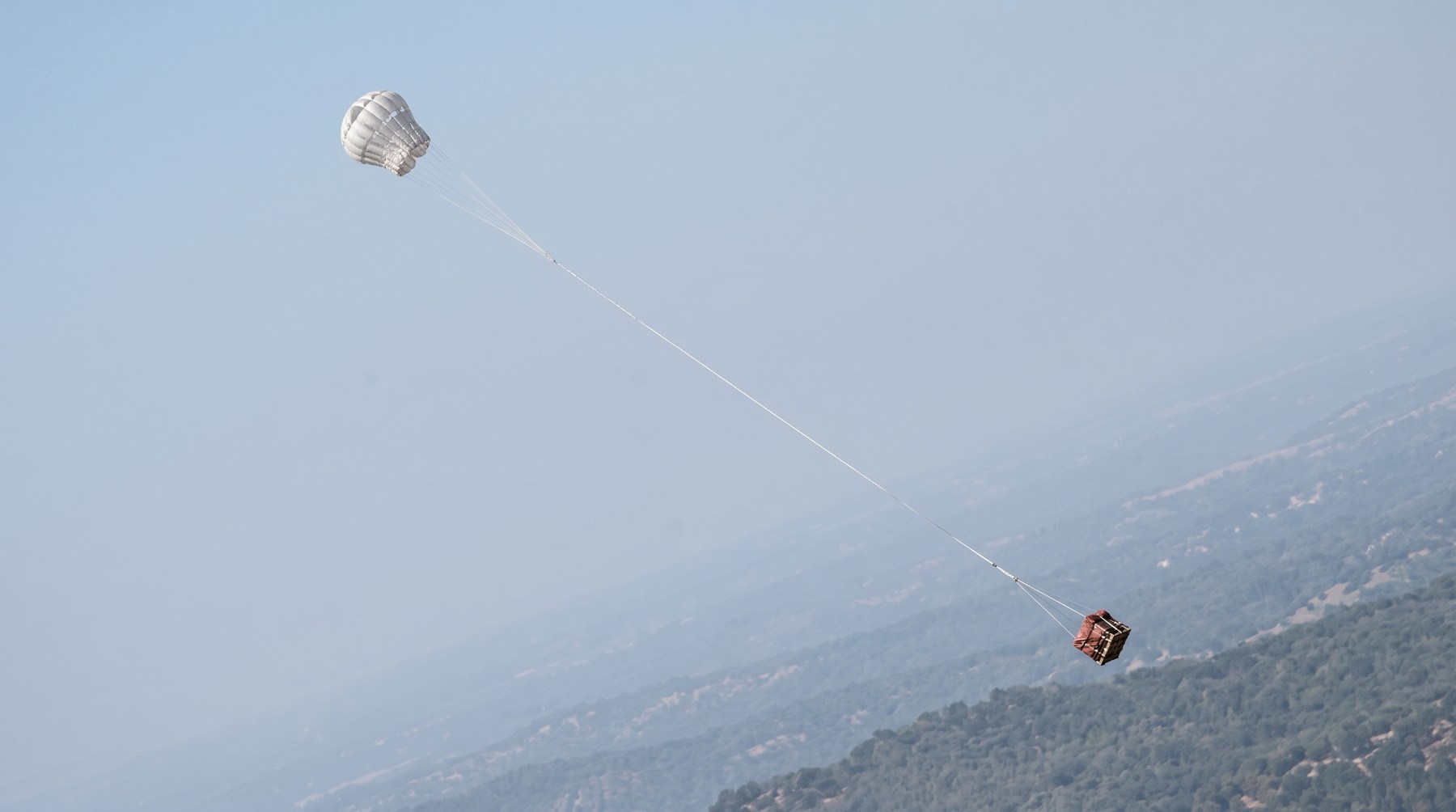
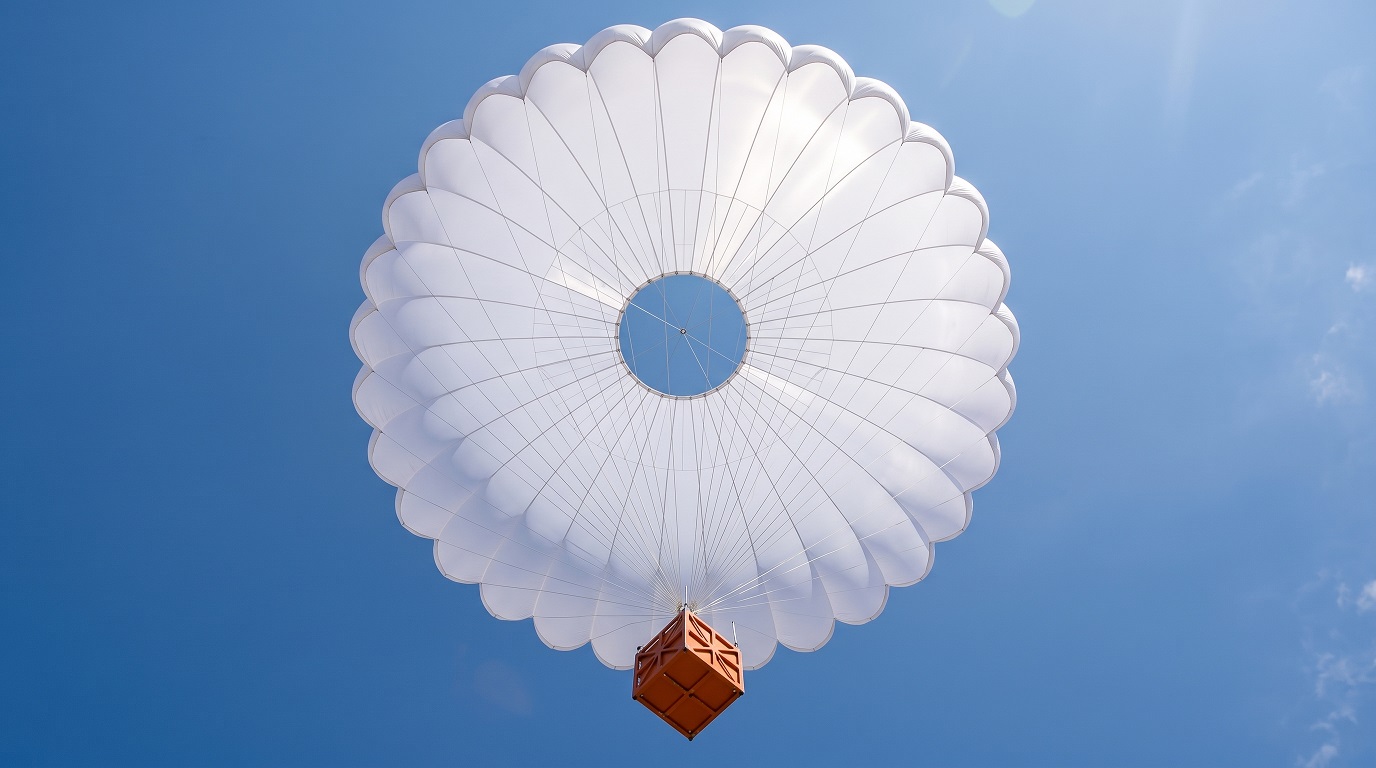
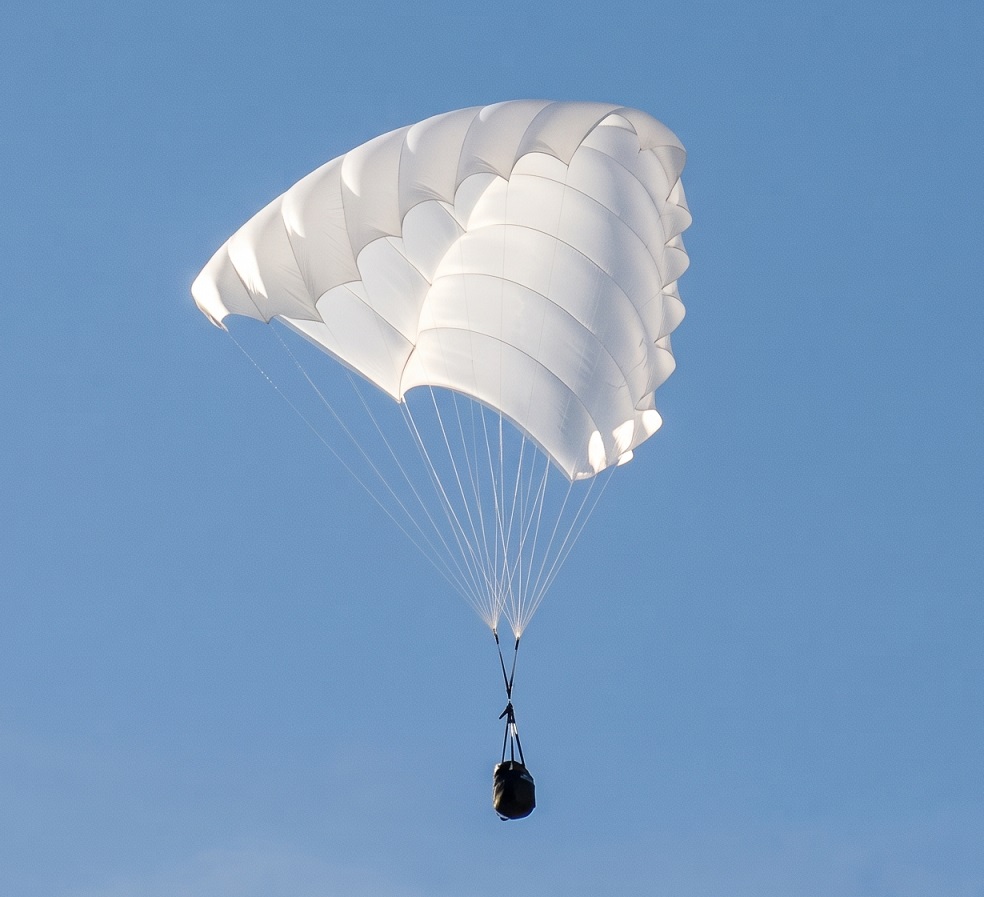
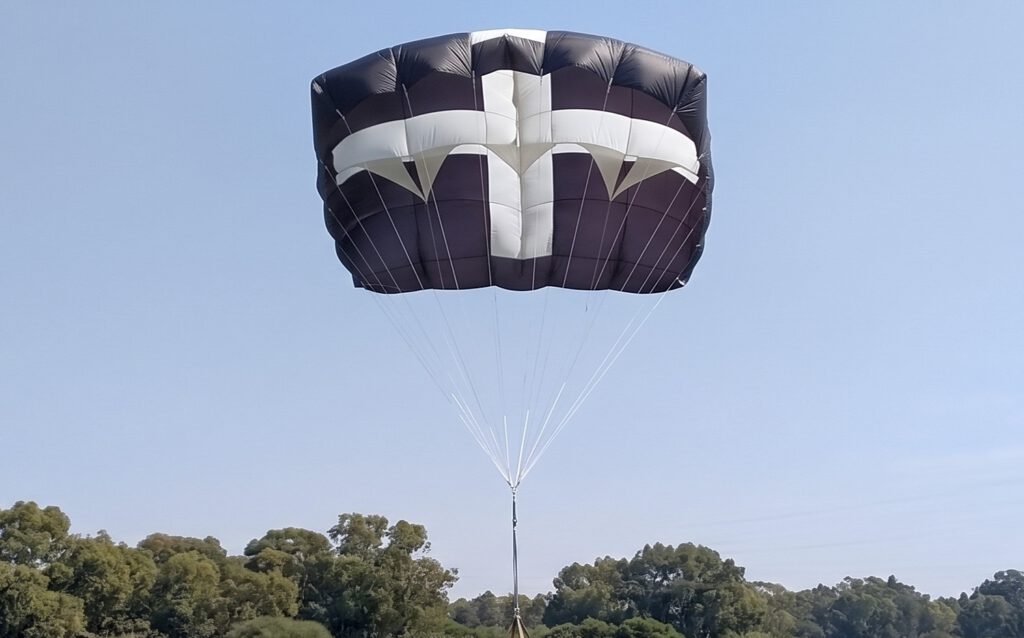
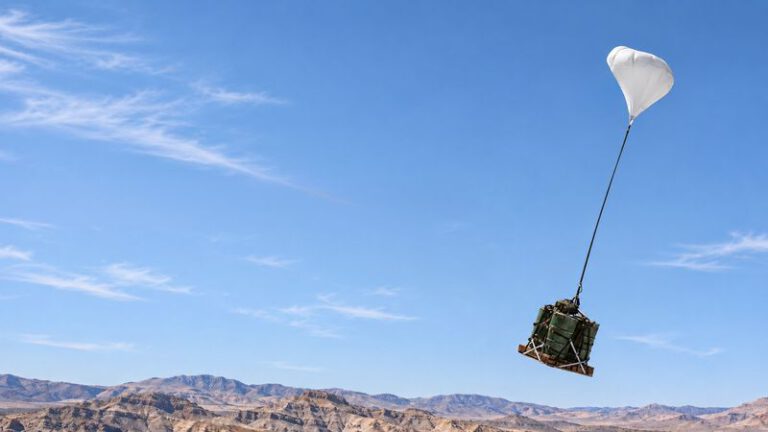
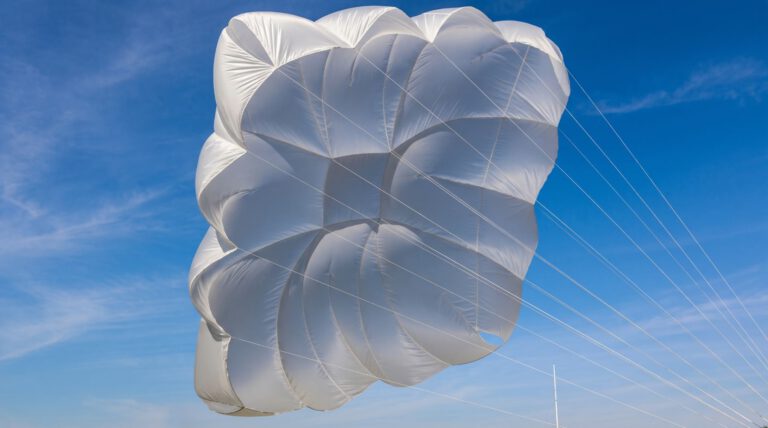
High Altitude Low Opening recovery systems engineered to stabilize your platform, control rapid descent and deploy the main canopy at the required recovery altitude.
APCO Aviation Defense develops lightweight, low-bulk textile solutions tailored to your platform, payload and opening-load limits.
High Altitude Low Opening (H.A.L.O) parachute platforms
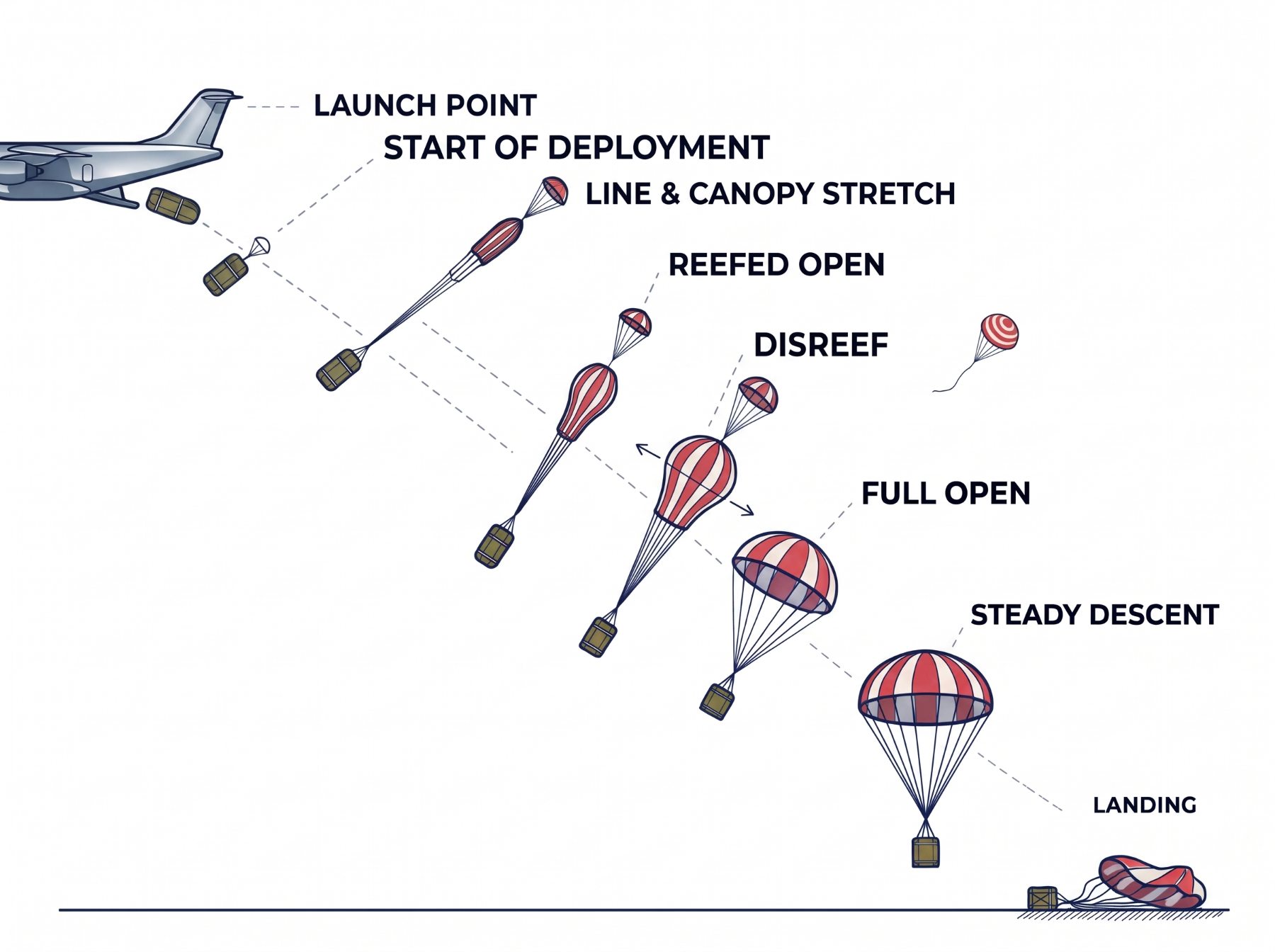
H.A.L.O. (High Altitude Low Opening) parachute platforms are typically engineered with a two-stage or three-stage deployment sequence, ensuring precise control during high-speed, high-risk descents.
Stage 1 – Drogue Stabilization: The initial parachute, often a drogue chute, stabilizes the platform’s direction and reduces excess speed. This step prepares for either another stabilization stage or direct main canopy deployment. The drogue operates at high flight speeds, enabling the platform to reach minimum safe main canopy opening altitude – the defining characteristic of low opening profiles.
Stage 2 – Controlled Descent: This high-speed descent results in rapid altitude loss and minimal drift, a critical advantage in defense and tactical operations where pinpoint landing accuracy is essential. Directional stability and descent-speed control ensure consistent and reliable main canopy openings, even at the lowest operational heights possible.
Main Canopy Deployment
The main parachute is extracted at low altitude by either the drogue or a secondary stabilization chute. Depending on opening speed and maximum allowable G-loads, reefing lines or slider mechanisms are integrated to manage deployment shock and protect payload integrity.
Transition Control & Safety Systems
Sensors: Deployment stages are triggered by onboard barometric sensors measuring altitude, or by descent rate sensors detecting reduced vertical speed as atmospheric pressure increases.
Speed Measurement: Dedicated devices combine static and dynamic pressure readings via Pitot tubes, applying Bernoulli’s principle for accurate airspeed calculation.
Mechanical Transition: Parachute changeover is executed by precision release mechanisms or pyrotechnic/pressure cutters such as Cypres® line cutters, ensuring flawless operation under extreme conditions.
Applications
H.A.L.O. systems are widely used in special forces operations, high-altitude UAV recovery, and covert resupply missions, where low-bulk, lightweight, high-performance parachute solutions reduce detection risk and improve mission success rates.
The APCO project journey
From Requirement to Mission Readiness
We work with your team through every stage of the project to deliver reliable, mission-ready solutions.
APCO Aviation Defense works within the standards, certifications, and regulatory frameworks that support defense and aerospace programs.
ISO & AS Certifications
ITAR
EAR
DFARS
NIST
Berry Amendment
Buy American Act
Wassenaar Arrangement
Supplier Partnerships
Offset Program Support
Why APCO Aviation Defense
H.A.L.O. Recovery Built Around Your Mission
APCO Aviation Defense draws on decades of aviation and parachute experience to develop lightweight, low-bulk recovery textile solutions for UAVs, payloads and specialized platforms.
We engineer the complete recovery sequence, from high-speed stabilization and controlled descent to main-canopy deployment, around your descent profile, opening-load limits and platform integration requirements.
Every stage serves one purpose: bringing your critical asset back safely.
Mission-led definition
Solutions are shaped around what must be recovered, captured or protected.
Lightweight, low-bulk design
Compact textile solutions help reduce integration burden and support prototypes, small production runs and larger project needs without requiring large batches.
Textile engineering expertise
Net materials, deployment logic and structural behavior are evaluated for the application.
Validation mindset
Selection and development are guided by the operating conditions and the validation required.
Off-the-shelf products
Proven products for recovery, deceleration and delivery
Explore ready product options developed for lightweight recovery, precision airdrop and mission-ready integration.
Find quick answers about our solutions, capabilities, and how we work.
Can H.A.L.O. recovery systems be used for UAVs?
Yes. The current APCO Aviation Defense H.A.L.O. application includes high-altitude UAV recovery. The recovery sequence needs to be developed around the UAV's mass, flight conditions, deployment limits, available volume and required return condition.
What needs to be defined before developing a H.A.L.O. recovery system?
Important inputs include release altitude, platform and payload mass, descent-speed limits, permissible opening loads, deployment altitude, drift requirements, available integration volume, attachment structure and required landing condition.
Why is a drogue parachute used in a H.A.L.O. recovery system?
The drogue can help stabilize the platform during the initial high-speed descent, manage excess speed and create a more controlled condition for transition to the main parachute.
Why is the main parachute deployed at a lower altitude?
Delaying main-canopy deployment allows the platform to lose altitude more rapidly before entering the slower final recovery phase. The appropriate deployment altitude depends on the platform, descent profile, opening loads and required landing condition
How is opening shock controlled during main-canopy deployment?
Depending on the parachute and operating conditions, reefing, slider mechanisms or other deployment-control methods can be used to manage how quickly the canopy inflates and how the resulting loads are transferred into the platform and payload.
How is the transition between H.A.L.O. recovery stages controlled?
The transition may be based on parameters such as altitude, descent rate or airspeed and can involve sensors, release mechanisms and cutting or separation devices depending on the recovery architecture.
Are all H.A.L.O. recovery systems the same?
No. The number of stages, parachute configuration, transition method, deployment altitude and opening-control approach depend on the platform, payload and mission requirements.