Home → Solutions → High Velocity deceleration systems
HIGH-VELOCITY DECELERATION
HIGH VELOCITY DECELERATION SYSTEM
SLOW. STABILIZE. RECOVER.
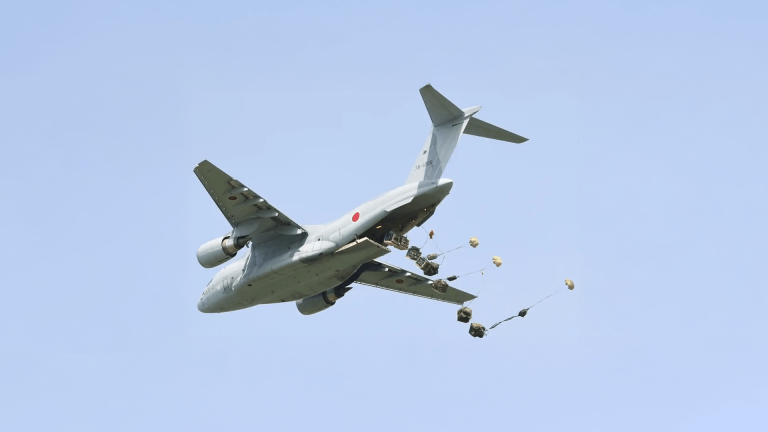
APCO Aviation Defense works with your team to develop high-velocity deceleration systems around the object’s speed, mass, aerodynamic conditions, deployment limits, and required recovery outcome.
Control extreme aerodynamic forces using staged parachutes, textile drag devices, and inflatable decelerators engineered for your application.
High-velocity recovery systems often combine several steps:
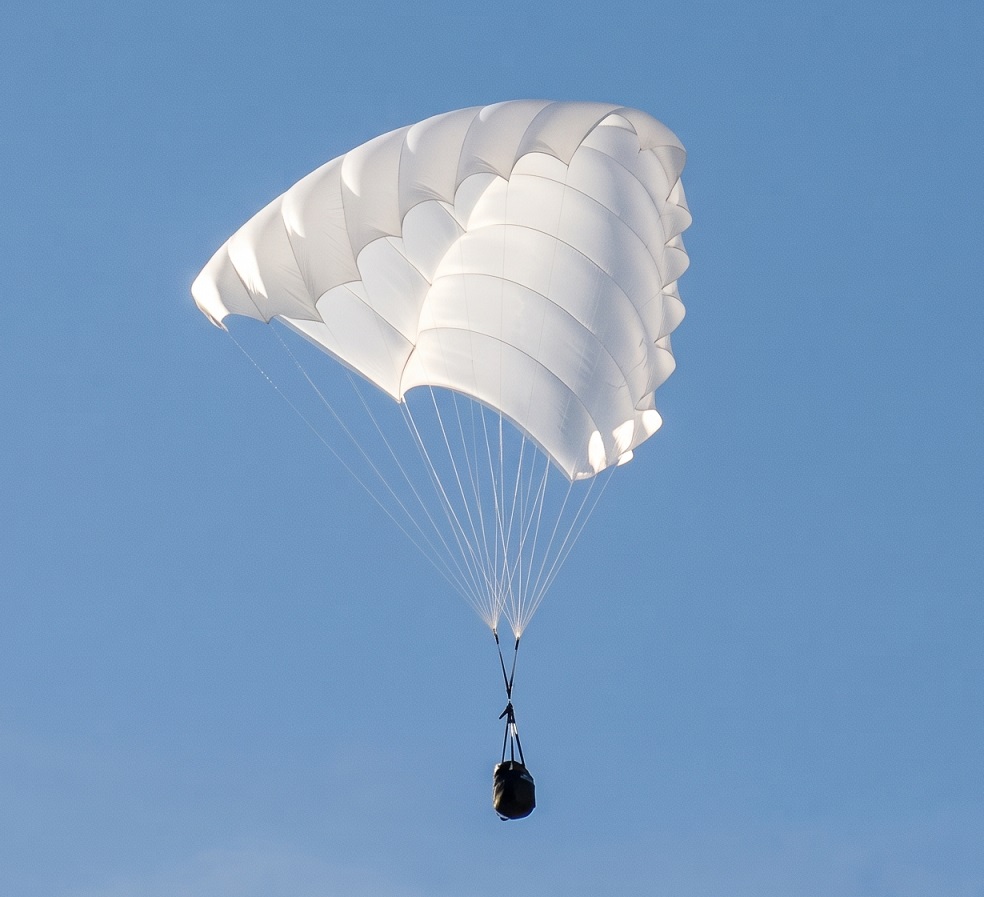
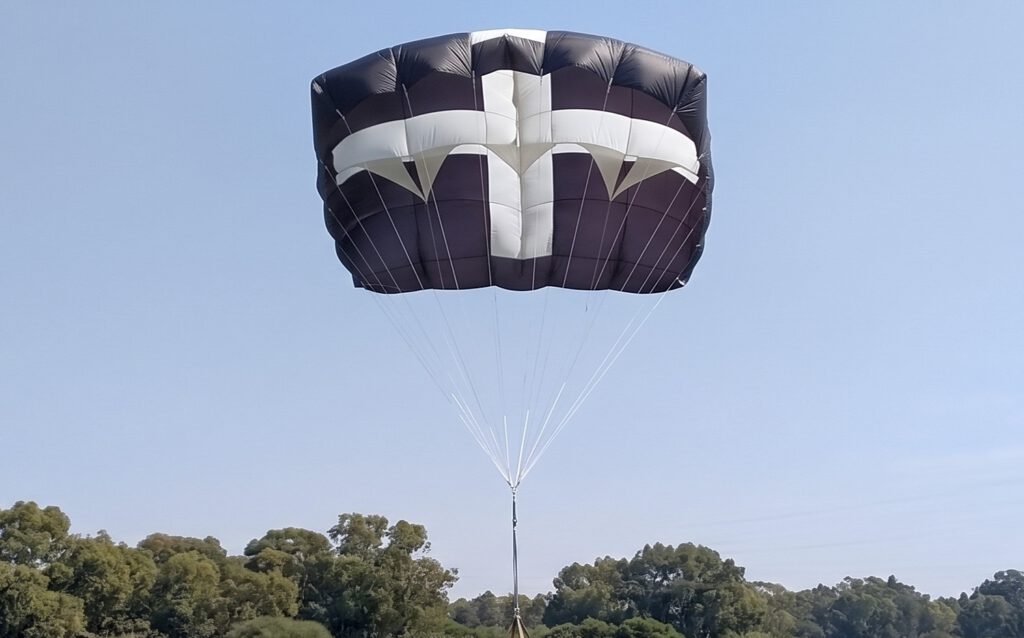
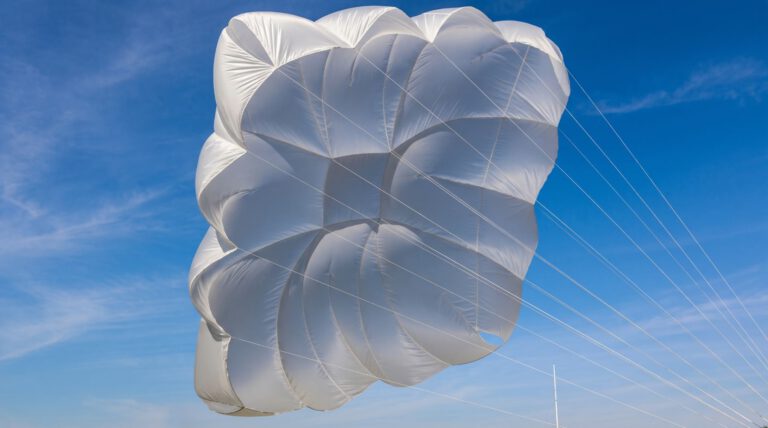
Parachute systems with staged deployment, using opening sleeves, sliders, reefing devices, or staged canopies.
Textile drag devices such as deceleration rings, drag cones, drag plates, and other shapes designed purely to create aerodynamic drag without functioning as full parachutes.
These offer a high strength-to-weight ratio and can function in subsonic, transonic, and supersonic regimes.
Common inflatable designs include
Inflatable Drag Ring – Circular ring that inflates to create uniform drag with minimal oscillation.
Paraflap – Textile panels that deploy outward to increase drag and stability.
Inflatable Paraskirt – Inflatable skirt structure that increases frontal area for enhanced deceleration.
Hybrid Inflatable-Cone Devices – Designs combining conical drag surfaces with inflatable rings for stability.
Engineering Considerations
A critical design factor for any high-velocity deceleration system is eliminating friction between connected parts during deployment. At extreme speeds, heat and friction can cut through even the strongest materials—much like a hot knife through butter.
Key best practices:
Material selection: Use low-friction fabrics such as PTFE (Teflon)-coated textiles.
Structural stability: Minimize relative movement between elements to prevent abrasion.
Damage analysis: In case of broken lines, bridles, or risers, identify if the cause was tensile overload or friction-induced melting.
Metal hardware: All connectors must be free from burrs, debris, or sharp edges. CNC-machined items often require polishing to meet standards; extruded metal components are generally preferable for high-velocity applications.
The APCO project journey
From Requirement to Mission Readiness
We work with your team through every stage of the project to deliver reliable, mission-ready solutions.
Find quick answers about our solutions, capabilities, and how we work.
What is a high-velocity deceleration system?
It is a recovery or deceleration system designed to slow a fast-moving object while managing aerodynamic forces, deployment loads, stability, and the required recovery outcome.
Which deceleration methods can be combined in a multi-stage system?
A system may combine staged parachutes, textile drag devices, and inflatable aerodynamic decelerators. The configuration depends on velocity, mass, altitude, deployment limits, and recovery requirements.
Can APCO Aviation Defense develop systems for different speed regimes?
APCO Aviation Defense evaluates solutions for subsonic, transonic, and supersonic applications. The selected concept and operating limits must be defined and validated for the specific project.
How does APCO Aviation Defense reduce friction during deployment?
The design may use low-friction textiles, stable connections, polished hardware, and controlled deployment sequences to limit abrasion, heat generation, and friction-related material damage.
What information is needed to define a custom system?
APCO Aviation Defense needs the object’s mass, dimensions, velocity, altitude, aerodynamic conditions, available deployment space, operating environment, and required deceleration or recovery outcome. Visit our "define your project" page to learn more about the requirements we define together.