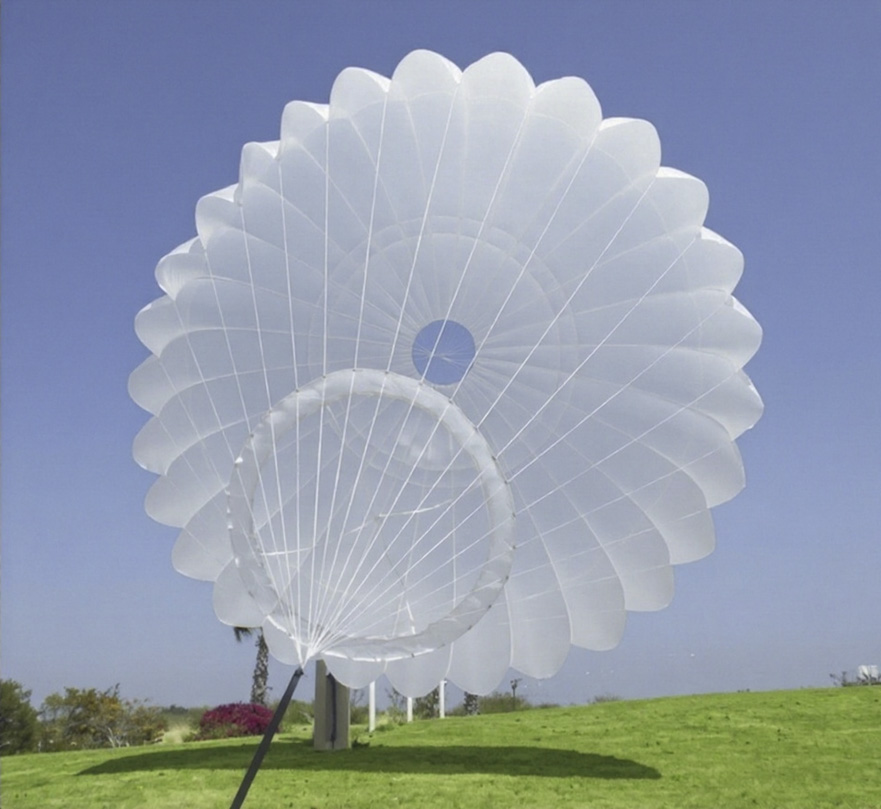
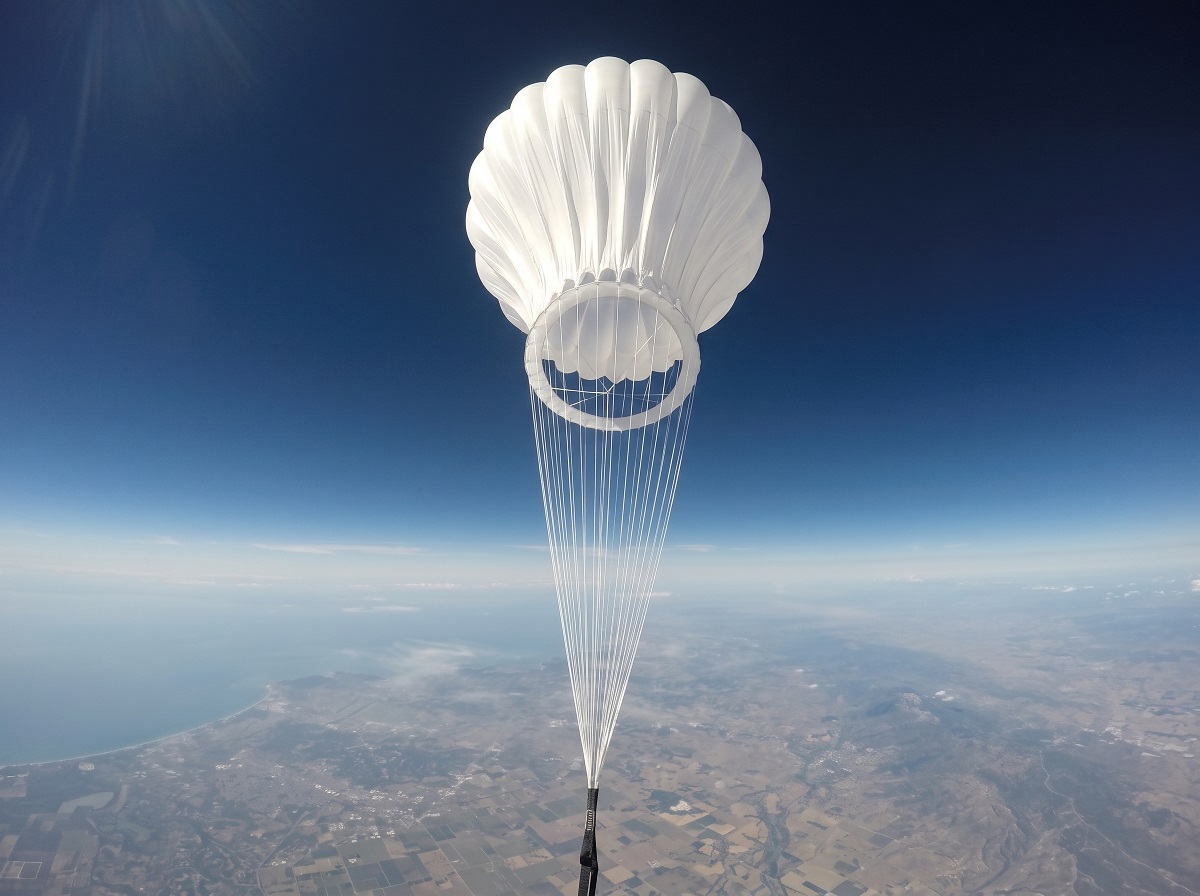
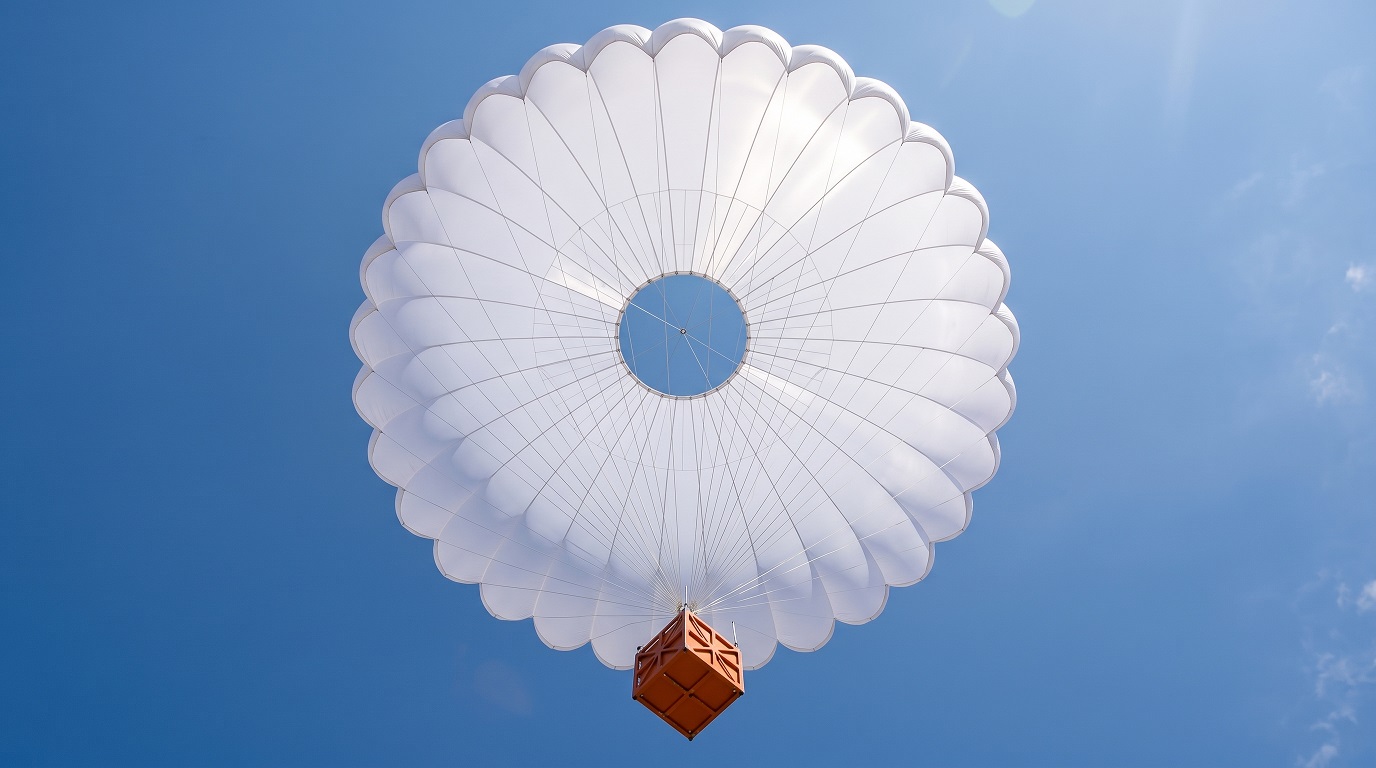
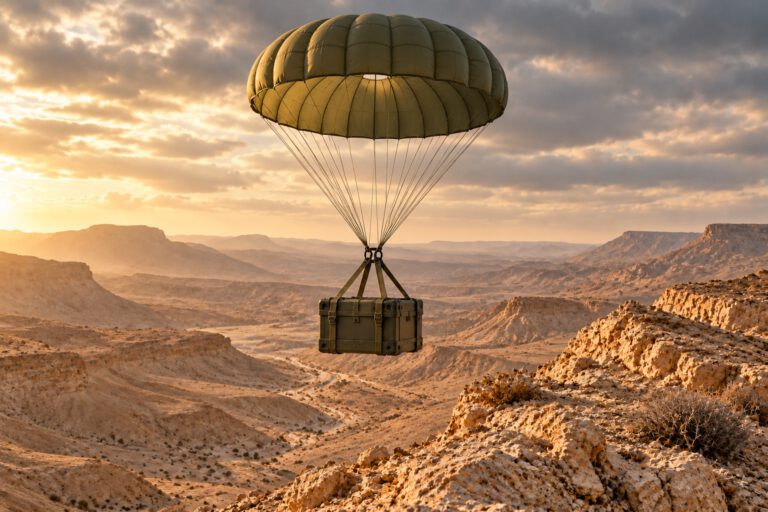
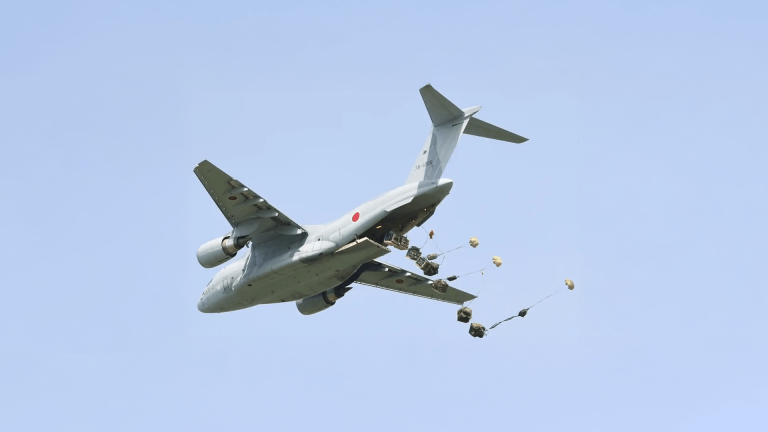
Lightweight round non-steerable parachutes for manned and unmanned applications – UAV recovery, cargo delivery, emergency rescue and recovery systems and payload deceleration applications.
APCO Aviation Defense round parachutes support suspended weights ranging from approximately 1 kg to 1,000kg, with canopy construction, deployment method and opening-shock control specifically engineered for the required operating method.
Find quick answers about our solutions, capabilities, and how we work.
What are round parachutes used for?
Round parachutes provide unguided non-steerable descent and deceleration for UAV recovery, cargo and equipment delivery, emergency recovery systems, and sensor or test-article recovery. Best suit applications where controlled descent is required without active steering.
What payload weights can APCO Aviation Defense round parachutes support?
APCO Aviation Defense offers round parachutes for suspended weights ranging from approximately 1 kg to 1,000 kg. The appropriate model and configuration depend on payload weight, deployment shock and speed, operating altitude, and required descent conditions.
What deployment methods are available for round parachutes?
Round parachutes can be configured for spring pilot chute, static-line or drogue-assisted extraction. Direct canopy extraction and deployment bag configurations are also available. Ballistic or pneumatic deployment may be used where approved. The deployment method is selected according to the platform and operating conditions.
How is opening shock controlled in round parachute systems?
Opening shock can be managed through slider mechanisms, reefing or staged deployment. The best approach depends on deployment speed, payload weight, structural limits and available opening height. Controlling opening forces helps reduce stress on the platform, payload and parachute attachment points.
Can round parachutes be customized for UAV recovery?
Yes. APCO Aviation Defense develops and produces lightweight, low-bulk recovery textile solutions that can be designed to UAV-specific requirements, including payload weight, packing volume, deployment configuration and structural limits. Canopy construction, materials, and opening-shock control are selected address the specific client and application requirements.
What is the difference between round and ram-air parachutes?
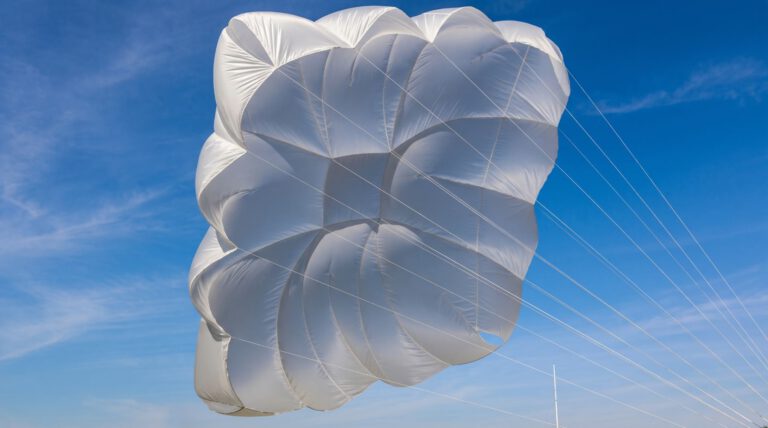
Round parachutes provide unguided descent, with horizontal movement determined mainly by wind and the surrounding air mass. Ram-air parachutes use an aerodynamic wing-shaped canopy that enables controlled forward flight and steering. The appropriate choice depends on whether the application requires straightforward deceleration and descent or guided recovery toward a designated landing area.
Engineered for mission success. Trusted worldwide.
From concept to fielding, APCO Aviation Defense delivers proven parachute systems that perform when it matters most.