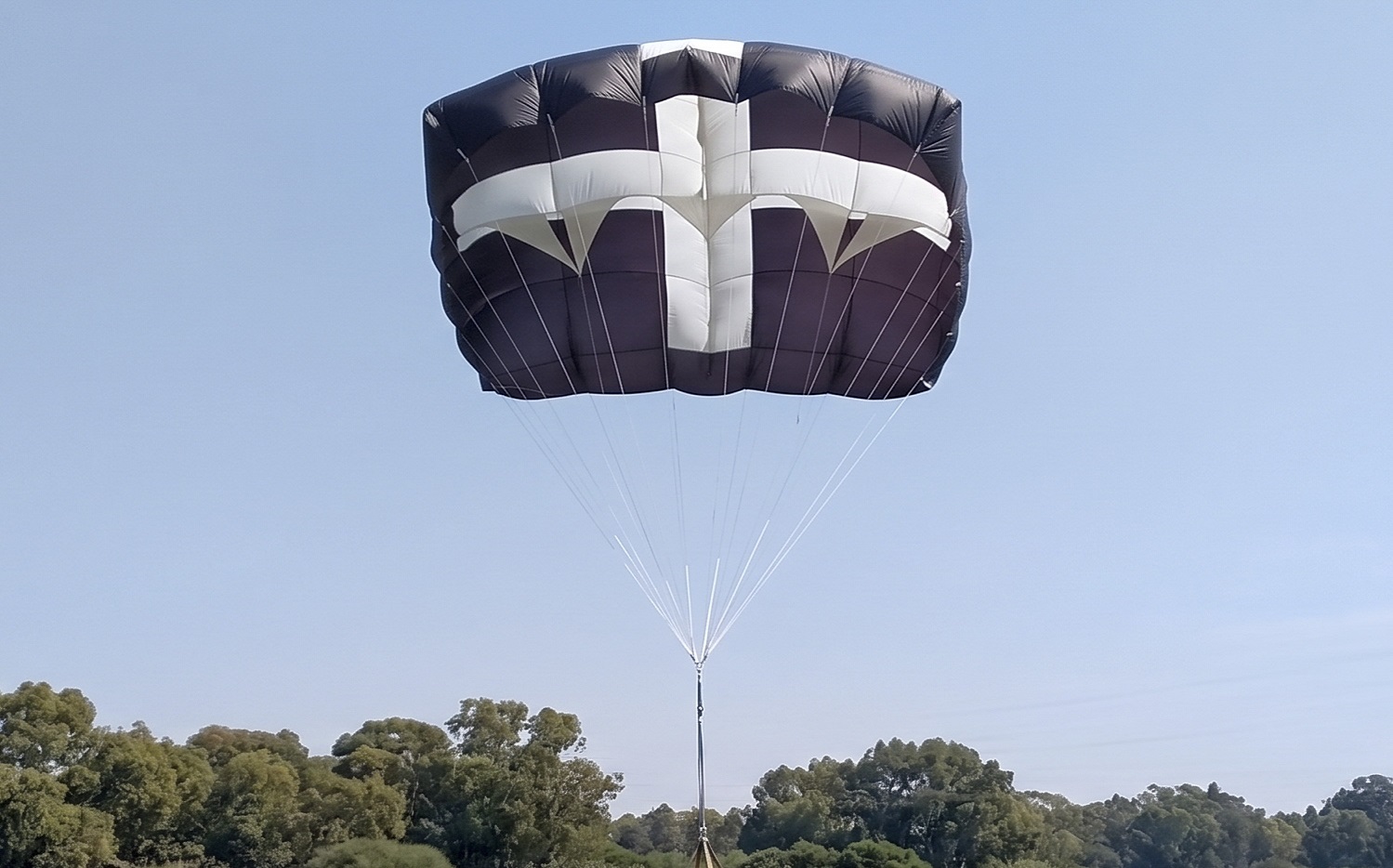
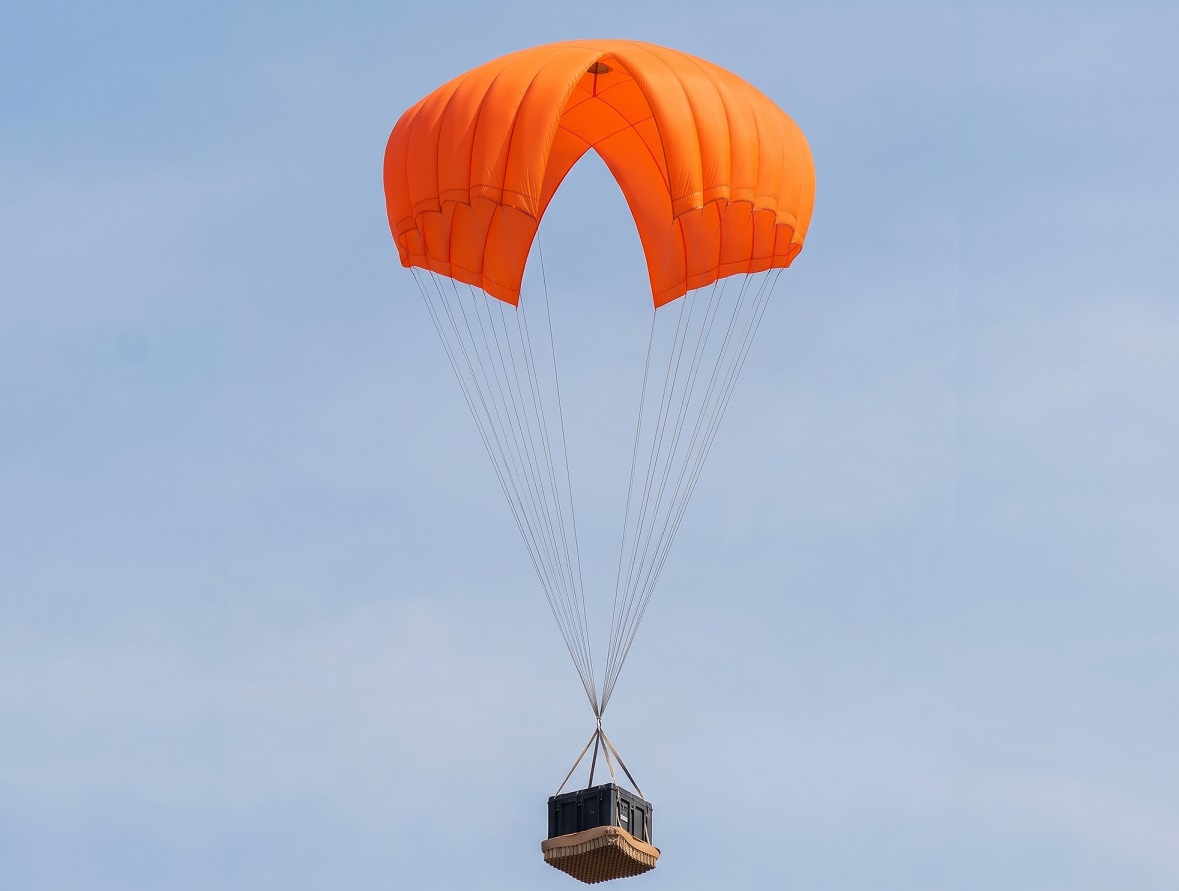
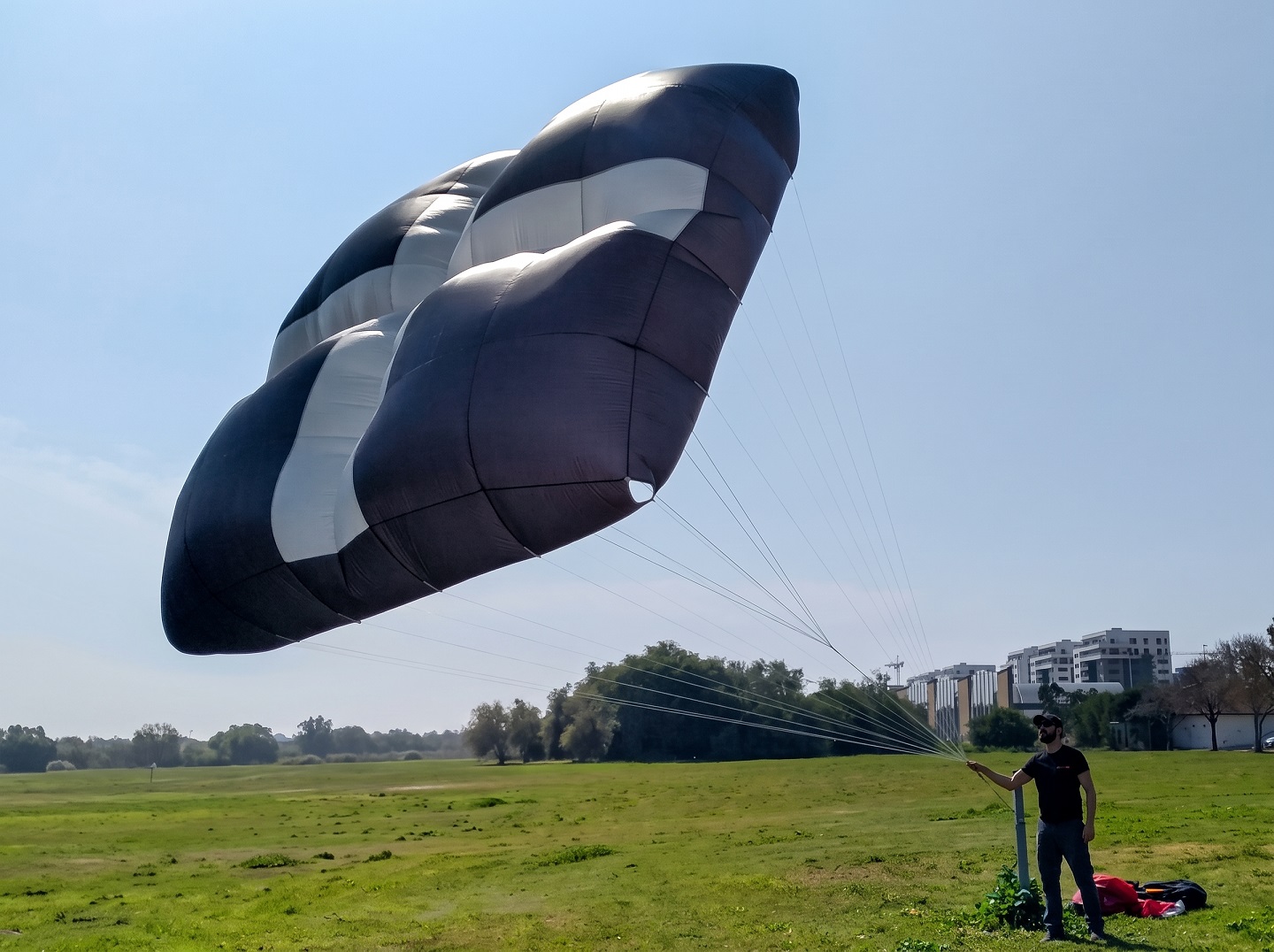
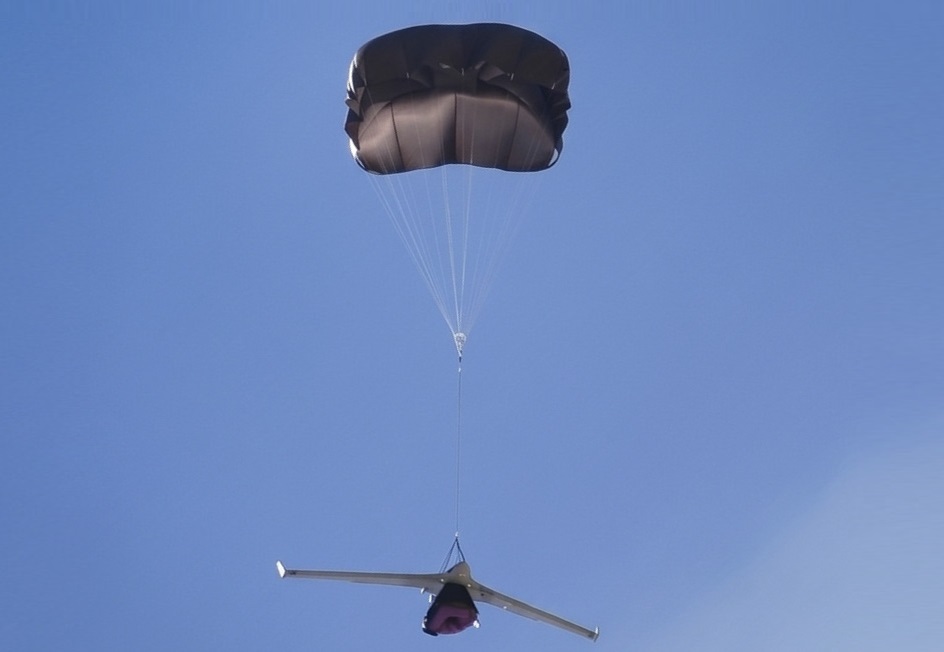
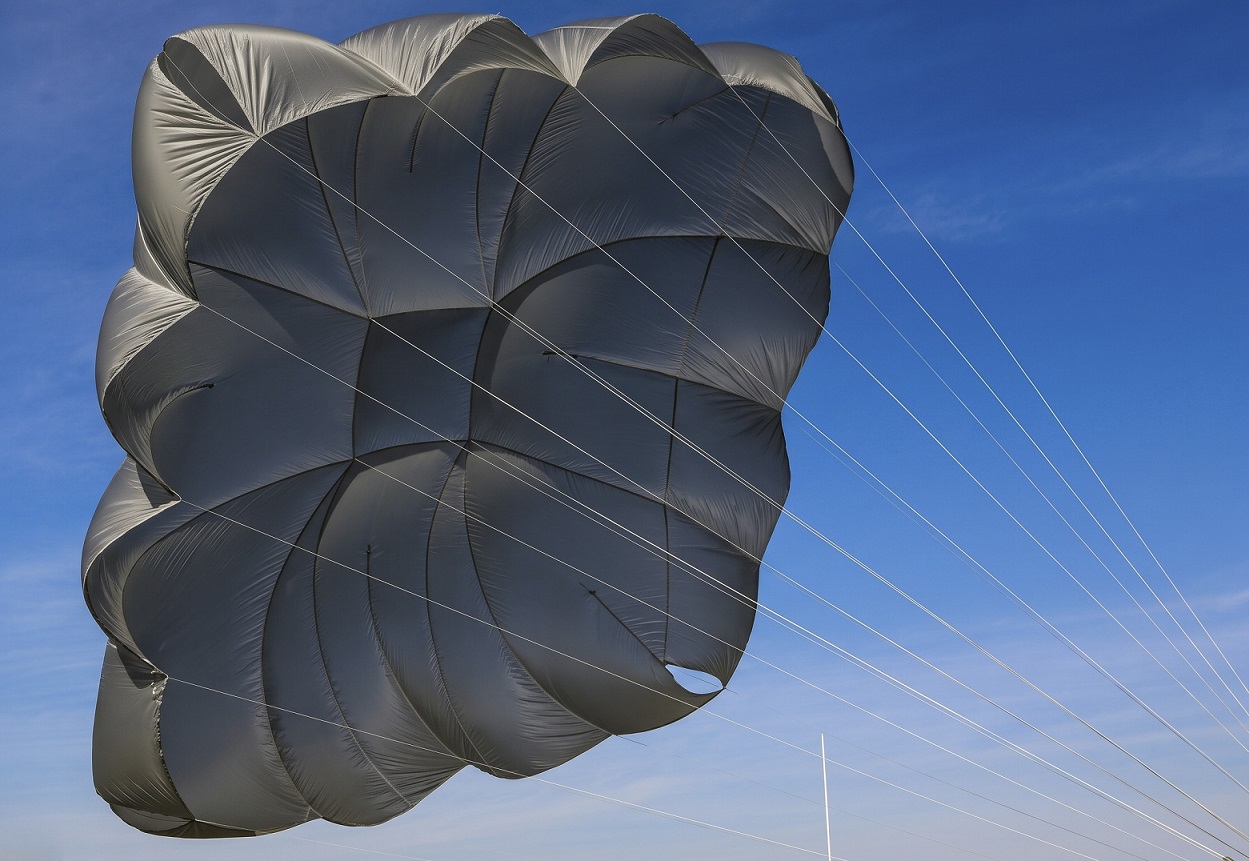
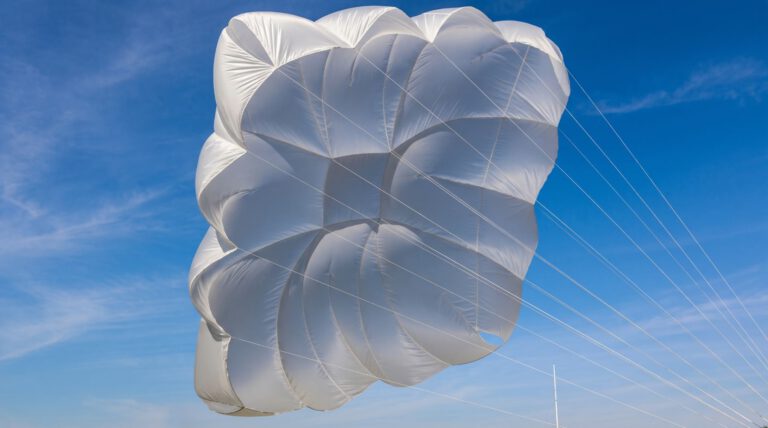
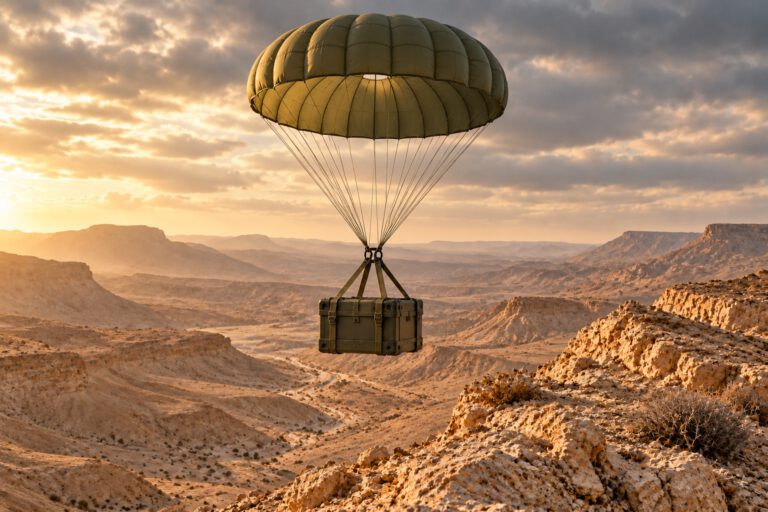
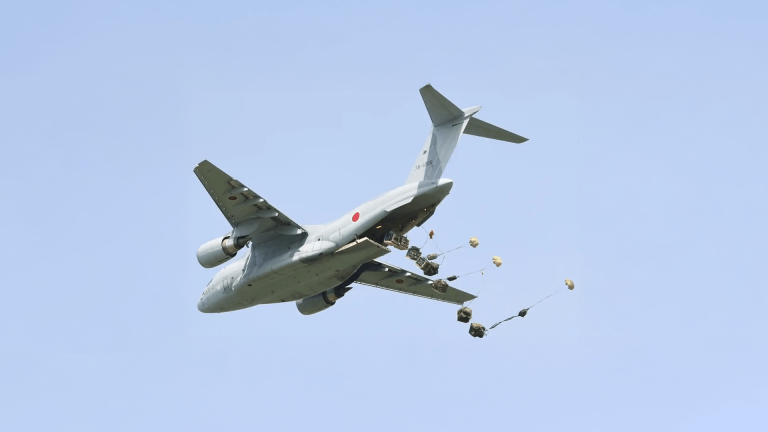
Lightweight cruciform and cross parachutes for UAV, VTOL and other recovery applications where rapid inflation, strong drag and stable vertical descent are more important than steering or glide.
APCO Aviation Defense develops cruciform parachutes with lightweight, low-bulk textile construction for recovery conditions where deployment height may be limited and payload protection, survivability and critical asset preservation are priorities.
Find quick answers about our solutions, capabilities, and how we work.
Why use a cruciform parachute for UAV recovery?
Cruciform geometry combines high drag, rapid inflation, low weight and strong pendulum stability. This makes it useful where stable vertical descent and limited deployment height are more important than steering.
Can a cruciform parachute support low-altitude recovery?
Yes. Suitable cruciform configurations can inflate rapidly and support low-altitude recovery. The required deployment height must still be confirmed for the chosen parachute, platform and deployment sequence.
How is opening shock controlled?
Opening shock can be managed through slider, reefing or staged inflation. The correct method depends on deployment speed, payload limits and the required recovery condition.
Is a cruciform parachute steerable?
Normally, no. A cruciform parachute is designed for stable vertical recovery. Where steering, glide or landing-path control is required, a Rogallo or ram-air parachute may be more appropriate.
Find the Right Cruciform Parachute
Compare suspended weight, deployment speed, required descent rate, operating altitude, opening-load limits and available installation volume with the confirmed APCO Aviation Defense cruciform parachute range.