

HALO Parachute Altitude: How Low Can the Main Open?
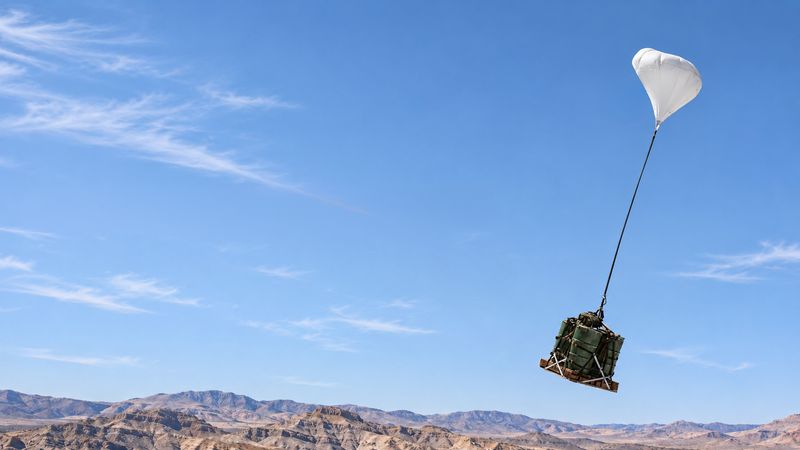
The minimum HALO parachute opening altitude for a UAV or payload is the lowest height at which the main canopy can begin deploying, bring the platform into controlled descent, and leave the required clearance for recovery. It depends on the speed and attitude at deployment, the canopy’s inflation sequence, and the loads the platform and […]
High-Altitude Precision Airdrop: How Much Glide Does a High Opening Buy?
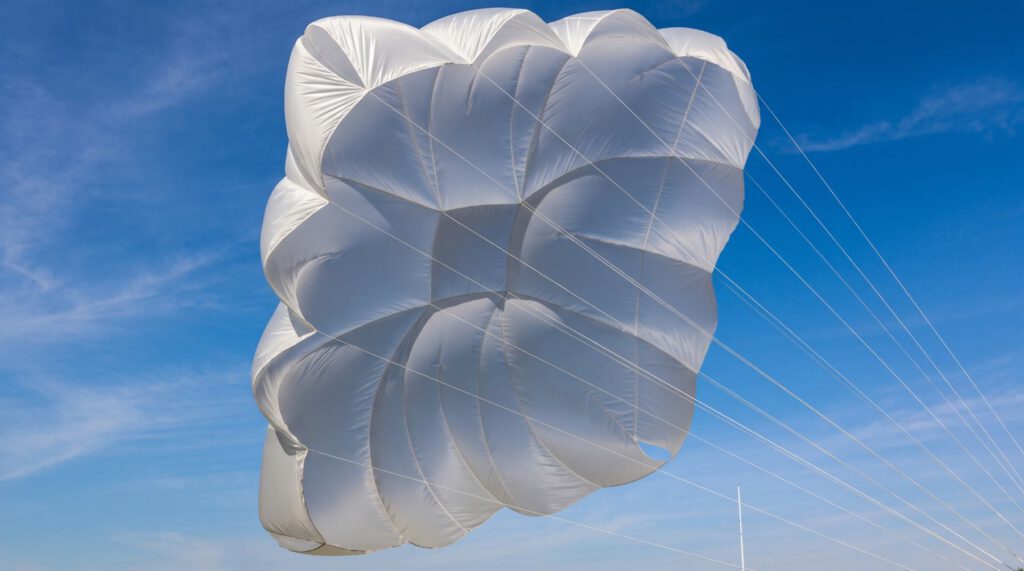
A high opening gives a cargo parafoil more altitude for guided flight. How much of that altitude is useful depends on how far the payload descends before the canopy is stable and steerable, what winds it encounters on the way down, and how much height it needs for the final approach. For the systems engineer, […]
Rough-Terrain UAV Recovery: Managing Descent, Impact, and Ground Protection
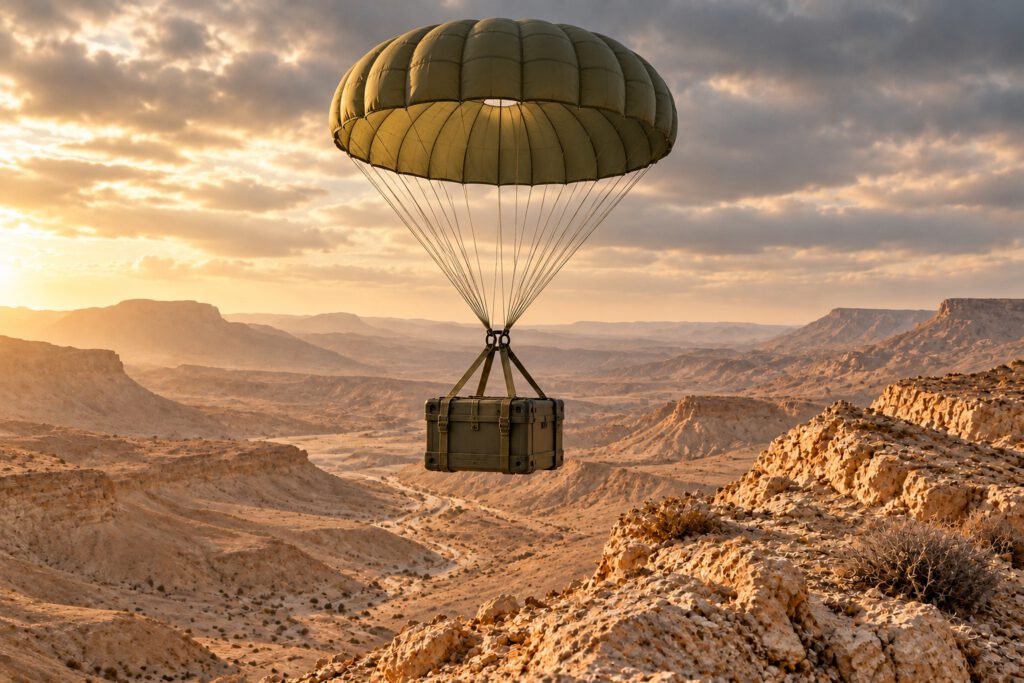
Recovering a UAV or payload on rocky, forested, sloped, or uneven terrain requires control throughout the landing sequence. Descent speed, horizontal movement, landing orientation, and ground contact all influence whether the platform reaches its final resting position intact. APCO Aviation Defense develops lightweight, low-bulk defense textile solutions that bring these requirements together. Depending on the […]
Military-Grade Validation & Certification
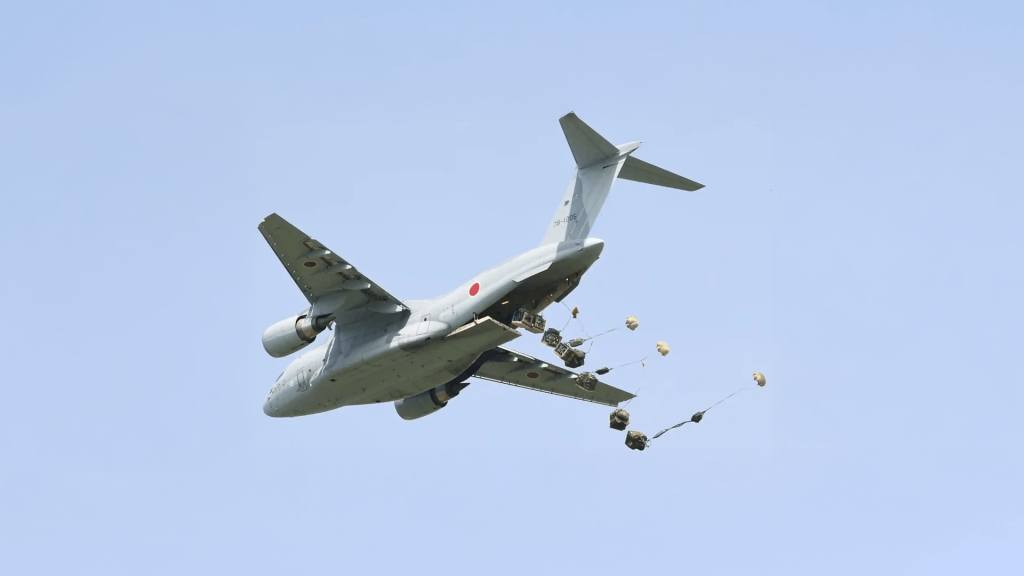
APCO Aviation Defense delivers certified, battle-proven parachutes and textile recovery systems for defense, aerospace, and dual-use applications worldwide. Our end-to-end quality assurance process and strict compliance with global military standards ensure unmatched reliability in the most demanding operational environments. At APCO Aviation Defense, quality isn’t an afterthought – it’s built into every layer of what […]
Superior aerodynamic performance

At APCO Aviation Defense, we specialize in delivering elite-level aerodynamic performance through our advanced ram-air parachute systems. With over five decades of experience designing world-record-setting paragliders, we bring unmatched expertise in airfoil dynamics, canopy behavior, and flight control. This legacy of innovation gives our defense-grade solutions a performance advantage that’s proven in both testing and […]
UAV Recovery Parachute Opening Shock: How Fast Is Too Fast?
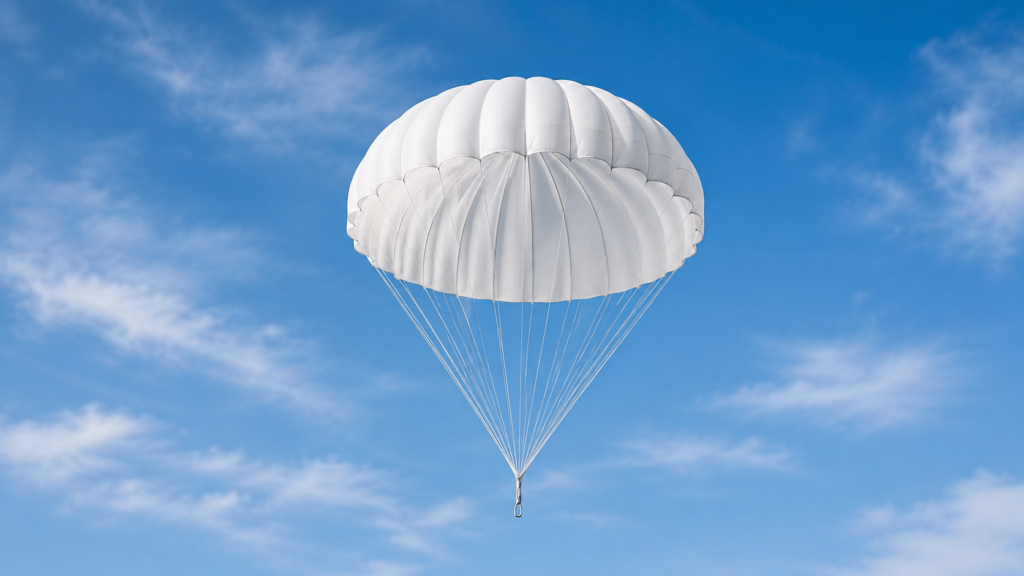
When a UAV recovery parachute opens, it must create useful deceleration quickly enough to protect the platform and payload. But the faster the canopy develops aerodynamic force, the greater the opening loads can become on the structure, attachment points and payload. The engineering challenge is therefore not simply to make the parachute open as fast […]
Sizing UAV Recovery Parachutes: How Much Descent Rate Is Too Much?
How to size a UAV recovery parachute: work backwards from the impact energy the airframe survives, not from a catalogue — descent rate, deployment envelope and mass budget included.
Why UAV Recovery Should Be Designed Around Survivability, Not Safe Descent Alone

- UAV recovery performance includes deployment, descent, landing, and post-landing conditions.
- Survivability defines what must remain intact, usable, repairable, or available for analysis after recovery.
- Opening loads, stability, impact forces, terrain, and post-landing movement can affect the returned asset.
- Recovery-system decisions should reflect the limits of the platform, payload, and mission-critical systems.
- A successful recovery outcome begins with a clear definition of what must return and the condition required.
Annular Parachute Canopy: Maximum Effective Area, Minimal Drag

A purpose-built annular canopy engineered to deploy as a net: over 40 m² of effective area from under 1.5 liters of packed volume, with full inflation in less than half a second.
Paragliding and Parachute Cloth

Phasellus tempor sem id tortor faucibus, ut scelerisque leo blandit. Pellentesque accumsan, lorem vel vehicula porttitor, ante diam dignissim mi, sit amet pharetra risus ipsum a est. Phasellus tempor sem.